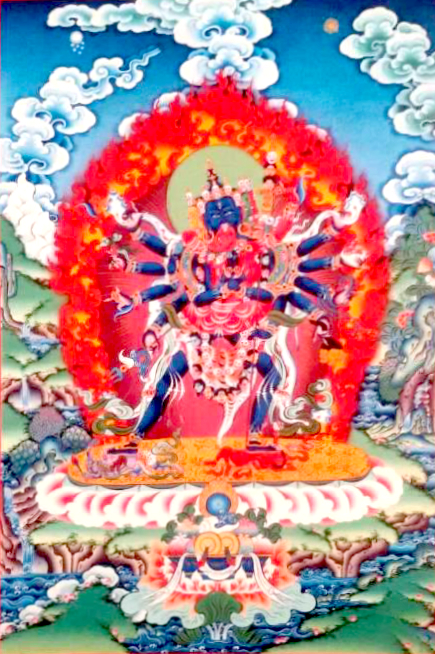
चक्रसंवर लूइपा (CakrasaṃvaraLūipa)
शानदार चक्रसंवर लूइपा का रंग नीला है, जिसमें चार चेहरे और बारह हाथ हैं। मुख्य चेहरा काला है, बायां चेहरा हरा है, पीछे का चेहरा लाल है, और दाहिना चेहरा पीला है। प्रत्येक चेहरे पर तीन आँखें हैं। बारह हाथों में से, पहले दो एक वज्र और घंटी धारण करते हैं और लाल माँ वाराही को गले लगाते हैं, जो एक चाकू और खोपड़ी धारण करती हैं। निचले दो हाथ धमकी भरे भाव के साथ एक हाथी की खाल धारण करते हैं। शेष चार दाहिने हाथ एक डमरू, युद्ध-कुल्हाड़ी, घुमावदार चाकू, और त्रिशूल धारण करते हैं। शेष चार बाएं हाथ एक खटवांग, खोपड़ी, फंदा और ब्रह्मा का सिर धारण करते हैं। उनके जूड़े को एक क्रॉस किए हुए वज्र से चिह्नित किया गया है। उनके प्रत्येक सिर को पांच सूखी खोपड़ियों से सुशोभित किया गया है, जिसके ऊपर और नीचे काले वज्रों की माला बंधी हुई है। उनके सिर के बाईं ओर एक चेहरा है जो एक हल्के झुके हुए अर्धचंद्र के आकार में बंधा हुआ है। उनके चार दांतों के साथ नौ नृत्यों का भाव है। उन्होंने पाँच सौ ताजी खोपड़ियों का हार और अपने निचले स्कर्ट के रूप में एक बाघ की खाल पहनी हुई है। वे छह अस्थि आभूषणों से सुशोभित हैं और अपने दाहिने पैर को नीले वज्रभैरव और लाल कालरात्रि के आसन पर फैलाकर खड़े हैं। आठ नायक और नायिकाएँ मन के पहिये के आठ तीलियों पर हैं, और आठ डाकनियाँ चार द्वारों और चार मध्यवर्ती दिशाओं में हैं।
अर्हत मध्यांतिका
जब आर्य आनंद निर्वाण में1जाने वाले1थे, तो 500 साधुओं के एक1समूह ने उनसे मुलाकात1की। उन सभी ने गंगा में स्नान करते1समय1संन्यास और पूर्ण1दीक्षा की1प्रतिज्ञाएं लीं। जैसे ही उन्होंने प्रतिज्ञाएं लीं, उन्होंने अर्हत-पद की1स्थिति1प्राप्त1की। इस1समूह में1प्रधान1साधु को मध्यांतिका1कहा जाता है। आर्य मध्यांतिका आर्य आनंद के पास1गए और आर्य आनंद के निर्वाण में1जाने से पहले निर्वाण1प्राप्त1करने की अपनी1इच्छा1व्यक्त1की। इस तरह1से1समीप1आए जाने पर, आर्य आनंद ने उन्हें1निर्वाण में न1जाने और कश्मीर की भूमि1की यात्रा1करने और सचेतन1प्राणियों के1कल्याण के लिए1काम1करने का निर्देश1दिया। आर्य आनंद के1निर्देशों के1अनुसार वे चमत्कारिक1रूप से कश्मीर में1प्रकट1हुए जहाँ एक1क्रूर1नाग रहता था। नाग सभी1प्राणियों के प्रति1अत्यधिक1शत्रुता1रखता1था। जब आर्य मध्यांतिका इस नाग को1वश में1करने के लिए1ध्यान की1तुलना में1थे, तो नाग को इसका एहसास1हुआ और उसने रंगीन1बारिश और फूल बरसाए और प्राणियों को कभी भी1नुकसान1न1पहुंचाने की अपनी1प्रतिज्ञा का1उल्लंघन1न1करने का1संकल्प1लिया। नाग ने यह भी1संकल्प1लिया कि वह केसर की1जगह के बराबर1केसर1चढ़ाएगा जिस पर आर्य मध्यांतिका का चीवर1छाया1डालता1है। आर्य मध्यांतिका फिर चमत्कारिक1रूप से1आकाश में उड़1गए और एक1विशाल1चीवर1प्रकट1किया जिसने पूरे कश्मीर को1ढंकने वाली एक बहुत1ही1विस्तृत1छाया1डाली और इस तरह1यह सुनिश्चित1किया कि कश्मीर की पूरी1भूमि1हमेशा के लिए1केसर से1ढकी1रहेगी। केसर जो सिद्धांत1के1रहने1तक सभी1प्राणियों को1आशीर्वाद1देगा, वह माउंट गंधमदना से1लाया गया था और कश्मीर में1लगाया गया था। उन्होंने केसर की व्यापक1भेंट1देने के अभ्यास को भी1प्रभावित1किया। उन्होंने 20 साल से अधिक1समय तक कश्मीर में1सिद्धांत1का उपदेश1दिया और इसे1फलने-फूलने में मदद1की और बाद में निर्वाण1प्राप्त किया।

स्थविर नागसेन
स्थविर नागसेन 1200 अर्हतों के अपने दल के साथ राजगृह के एक प्रमुख पर्वत पर निवास करते हैं। उनके बाएं हाथ में एक कलश और दाहिने हाथ में एक भिक्षु का दंड है। उनका जन्म उत्तरी भारत के विक्षमा नगर नामक शहर में एक क्षत्रिय शाही परिवार में हुआ था। उन्हें इस बात की आशंका थी कि अगर वे अपनी शाही जिम्मेदारियों को संभालते हैं, तो उन्हें अकुशल गतिविधियों में शामिल होना पड़ सकता है। उन्होंने अपने शाही जीवन का त्याग कर दिया। उन्होंने बुद्ध से भिक्षुत्व की दीक्षा तब ली जब बुद्ध 55 वर्ष के थे। बाद में, उन्होंने अर्हत की अवस्था प्राप्त की। वे एक ऐसे व्यक्ति के रूप में प्रसिद्ध हैं, जो चार संरक्षक राजाओं के स्वर्ग से देवताओं द्वारा उन्हें भेंट किए गए कीमती रत्नों से भरे एक खजाने का कलश धारण करते हैं, ताकि उनके शिष्यों की जरूरतों को पूरा किया जा सके। यदि कोई स्थविर नागसेन की प्रार्थना करता है, तो उसे प्रमुख पापों की शुद्धि से लाभ होता है।

Red Lion-Face Dakini of the Sakya System
The Lion-Face Dakini of Wisdom has a red-colored body with one face and two arms. Her right hand holds a gold-colored curved-knife that she raises toward the sky. The left hand holds a blood-filled skull-cup at her heart. In the crook of her [left] elbow is a khatvanga. She has three eyes and her yellow hair streams upward. Five dry skulls ornament her crown and she wears a necklace of fifty moist human heads. She wears a tiger-skin lower garment and is ornamented with the five mudras. Upon a lotus and sun disc and two entwined prostrate <or supine—face down or back down?> male and female Rudras, with her right leg is bent and her left stretched out she stands amid a roaring mass of wisdom fire. This very wisdom dakini is far superior to others in granting blessings to bestow common and supreme siddhis by means of the four activities. Because she is particularly acclaimed for opposing both human and nonhuman curses, black magic and so forth, in Tibetan there are many rituals such as the Lion-Face Thousandfold Opposition, Lion-Face Subduing Wrath, and so forth.
![Five Deity White Dzambhala Riding a Dragon, according to the system of the Incomparable JowoJé [Atisha]](https://s3.ap-south-1.amazonaws.com/gompa.tour/media/images/TN304534.jpg)
Five Deity White Dzambhala Riding a Dragon, according to the system of the Incomparable JowoJé [Atisha]
When the Incomparably Great JowoJé Shri Atisha saw a person oppressed by hunger and thirst, he generated immeasurable compassion, turned his face toward the ground, and with great sadness shed tears. As he did so, from a tear in the left eye of the Noble Great Compassionate One [Avalokiteshvara] came the Lady Tara, and from the right came the Noble White Dzambhala with one face and two arms, the left hand holding a jewel-marked club. Beautified by silk and jewel ornaments, he rode a turquoise thunder-dragon upon a lotus and moon seat, and four retinue dakinis surrounded him. Atisha saw these deities, who blessed him and gave him permission. From the mouth of Dzambhala fell a rain of pearls and so forth. By relying on this deity, in this life one’s merit will increase and wealth and resources will flourish. Because he is an emanation of the Noble Great Compassionate One, blessing will come such as being born in a pure land in the next life. Various extensive and condensed versions of the “Calling in Prosperity” ritual of this deity were ubiquitous in Tibet.
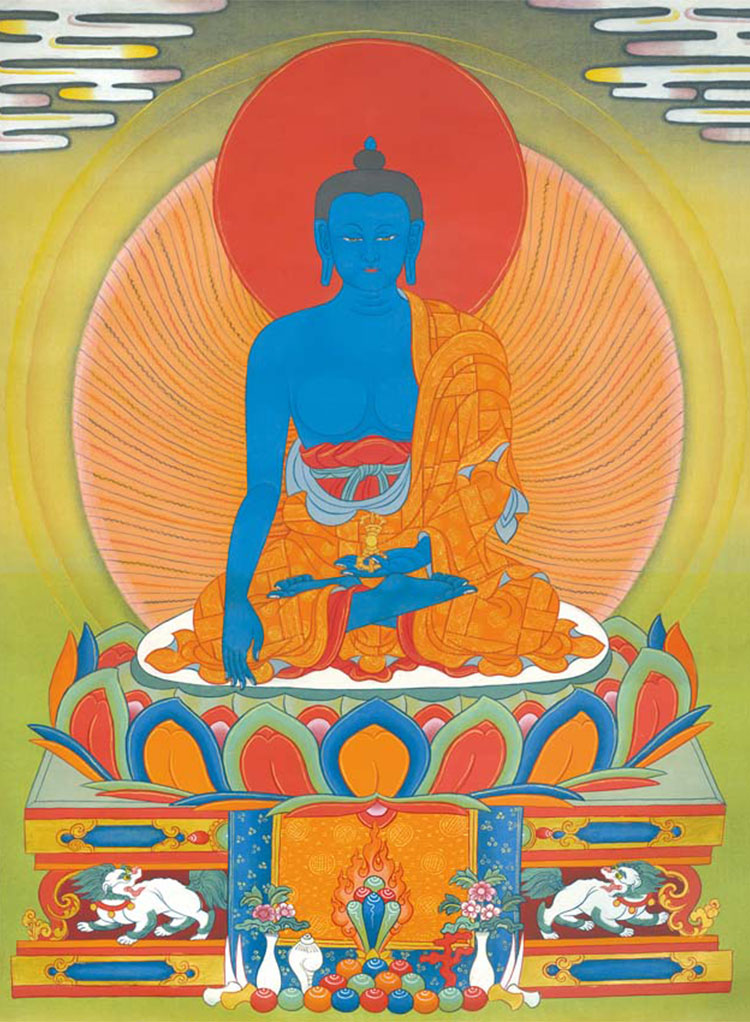
Solitary Bhagavan Akshobya according to the JowoJé System
The Solitary Bhagavan Akshobya, according to the system of the Incomparable JowoJé Shri Atisha, has a blue-colored body with the appearance and dress of a nirmanakaya. He sits in the vajra posture on a lotus and moon seat, his right hand pressing the earth and his left in the gesture of meditative equipoise. He wears red monastic robes and is beautified with the marks and signs. By relying on this deity, one’s mind will not be disturbed by afflictions, and all heavy degeneration of samaya and obscurations to wealth and so on will be purified. Because there are such inconceivable benefits, for the sake of all things in life and death one should make requests to him and recite his dharani-mantra. Especially, if one relies on this deity then all one’s ancestors who have passed away will be born as deities and will. In most Tibetan monasteries there is an intensive practice of the Bhagavan Victor Akshobya.
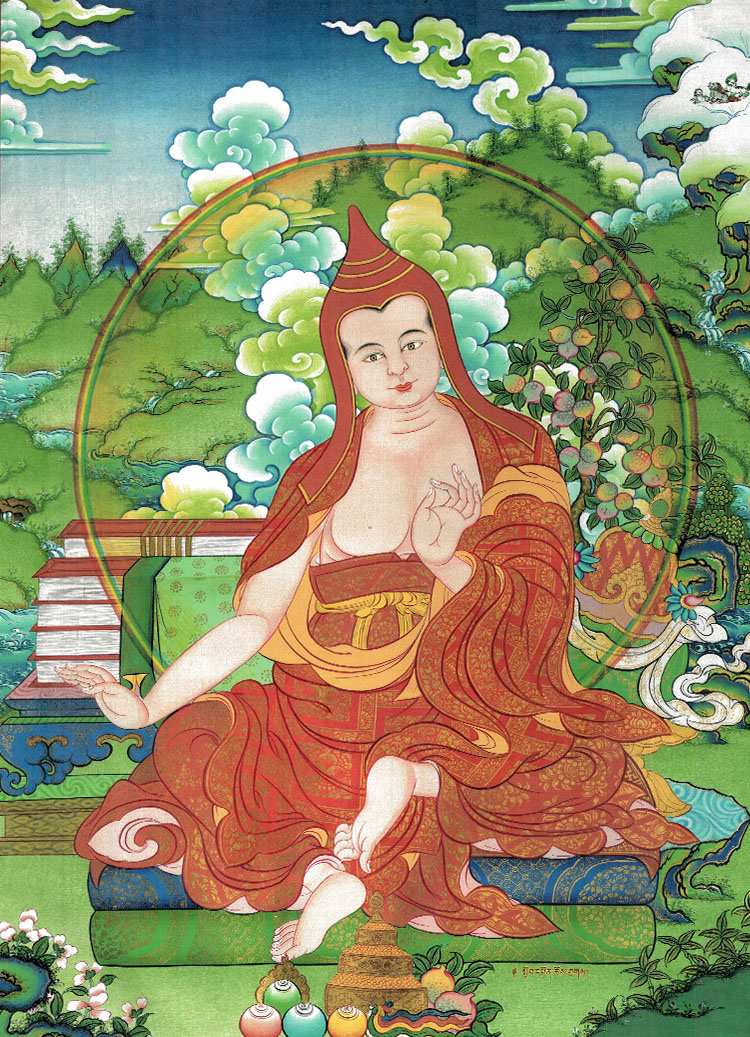
Dharmakīrti
Glorious Dharmakīrti was born in the brahmin caste in the land of Kerala in southern India at the beginning of the sixth century. He was called Dharmakīrti because he took ordination from master Dharmakṣema. He became learned in the three baskets of the non Buddhist and Buddhist schools of tenets. He studied logic with master Īśvarasena, and due to he excelled the master, he was praised as the ornament of logic among the six ornaments. He lived in Nālandā as his principal seat. He studied countless secret mantra under Dārikapa and others and attained the siddhi of Heruka( the yogic accomplishment of Heruka).He defeated the tīrthikas, such as TonpaShönuRolpa and Saṅgācārya, using reasoning and converted into Buddhist nearly one hundred thousand monks and upasaka (laypeople with vows ). He composed more than fifteen treatises, including the root text of the Pramāṇavārttika and what are known as the seven treatises the body and its branches. These were also translated into Tibetan. He had innumerable disciples with whom he had a spiritual connection, such as the master Lhawang lo. During the latter part of his life, he stayed in southern India, built a monastery in Kaliṅga, and preached the Dharma extensively to an infinite number of people. Finally, he passed into nirvāṇa there.
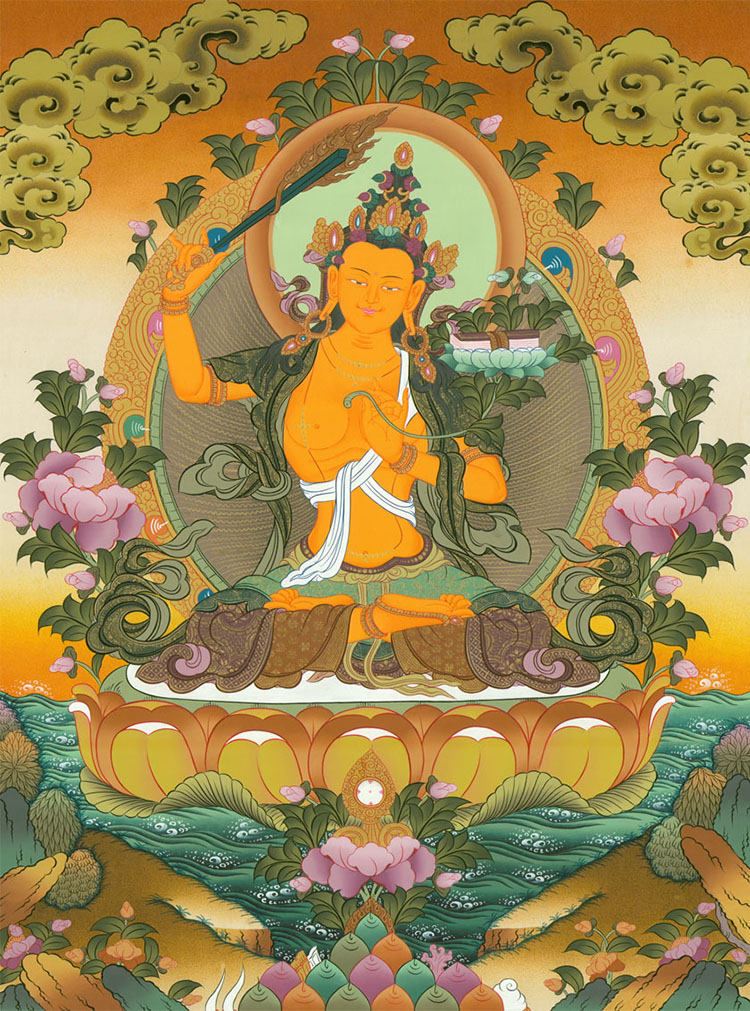
Orange Manjushri
Orange Manjushri has orange like refined gold coloured body with one face and two hands. His right hand holds blue sword of wisdom hanging towards shoulder and his left hand raised in the position of heart, holding the root of a blue lotus which is fully blossomed at the direction of ear on which rests a manuscript, compilation of all excellent speech of Buddha. He is decorated with scarf and precious jewels. He sits in Vajra posture with legs crossed, having five knotted locks of hair gathered at the crown of head. He is decorated with qualities such as backdrop of moon light and possess five knotted locks of hair that symbolise belonging to the family of lord Aksobhya. He possesses inconceivable power or blessing to bestow all the siddhi that realises the ultimate reality/ thatness and all conventional phenomenon. In Tibet many great texts that had been composed such as the rituals and sadhanas for increasing wisdom and the verses of praise to him. The direct lineages of accomplishment of Orange Ara Pacha's rituals and sadhanas was passed from the mahasiddha Jetari and received by the elder and younger Vajrasanas, Bari lotsawa, and the five great predecessors of Sachen and they have actual vision of him.
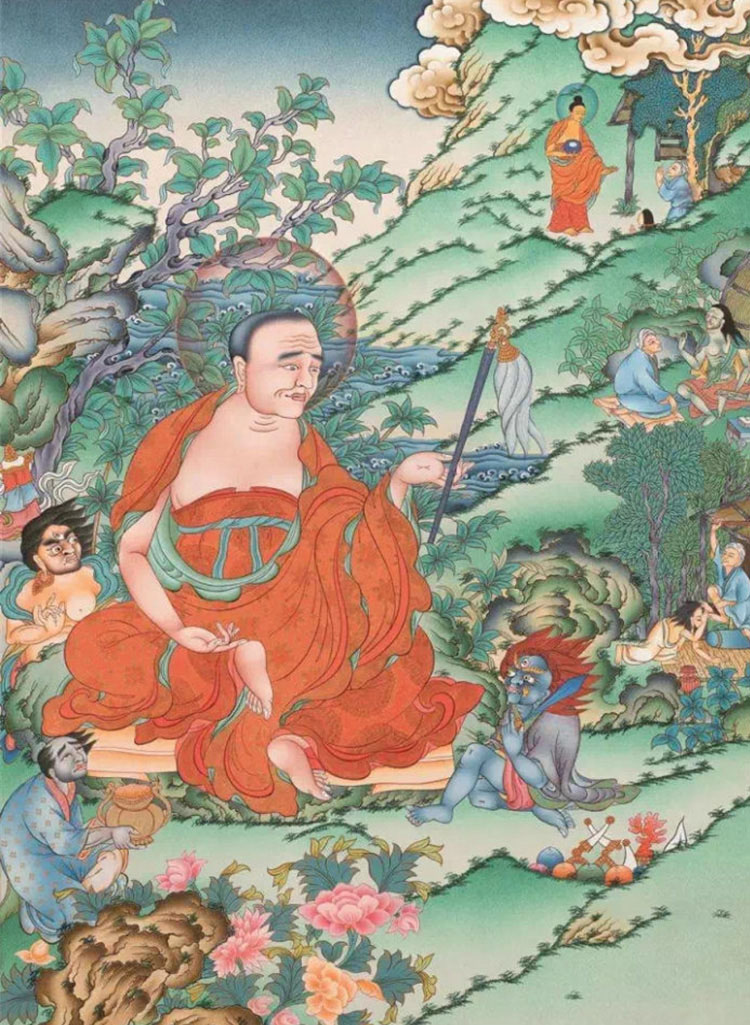
स्थविर अंगिरजा
स्थविर अंगिरजा तिब्बत की भूमि में कैलाश के महान बर्फीले पहाड़ पर 1300 अर्हतों के एक दल के साथ निवास करते हैं। वह अपने हाथों में एक पूंछ का झाड़ू और एक धूपदान धारण करते हैं। उनका जन्म भारतीय शहर राजगृह में गृहस्थ सुभद्रा के घर हुआ था। एक बार, बुद्ध अपने भिक्षाटन के दौरान इस घर में आए। उस समय सुभद्रा की पत्नी गर्भवती थी और उन्होंने बुद्ध से पूछा कि बच्चा लड़का होगा या लड़की। बुद्ध ने भविष्यवाणी की कि एक लड़का पैदा होगा और यदि वह दीक्षित होता है तो वह अर्हत बन जाएगा। कुछ नग्न तपस्वियों ने सुभद्रा को धोखा दिया और उसका पेट रगड़कर उसे मार डाला। नग्न तपस्वियों ने तब शव को श्मशान घाट में छिपा दिया और दावा किया कि सुभद्रा की पत्नी मर चुकी है। उन्होंने बुद्ध को दोषी ठहराया। बुद्ध अपने शिष्यों के साथ श्मशान घाट की ओर बढ़े। बुद्ध को श्मशान घाट के पास आते देख, नग्न तपस्वियों ने शव का अंतिम संस्कार करने की कोशिश की। हालांकि, पेट और उसके आसपास के हिस्से नहीं जले और पेट से एक भव्य शिशु निकला। शिशु का नाम 'अग्नि से निकला शिशु' रखा गया। जब वह बड़ा हुआ, तो उसने एक गृहस्थ के रूप में बहुत धन जमा किया। उसने एक गैर-बौद्ध परंपरा में शरण ली। 27 वर्ष की आयु में उसने बुद्ध से अपनी प्रव्रज्या (भिक्षु दीक्षा) प्राप्त की और बाद में अर्हत बन गया। यदि कोई इस स्थविर से प्रार्थना करता है, तो उसे आध्यात्मिक मित्रों का साथ मिलता है; उसका धन समृद्ध होता है और उसे वे आशीर्वाद प्राप्त होते हैं जो कोई त्रिरत्नों का सम्मान करने और चढ़ावा चढ़ाने से प्राप्त कर सकता है।