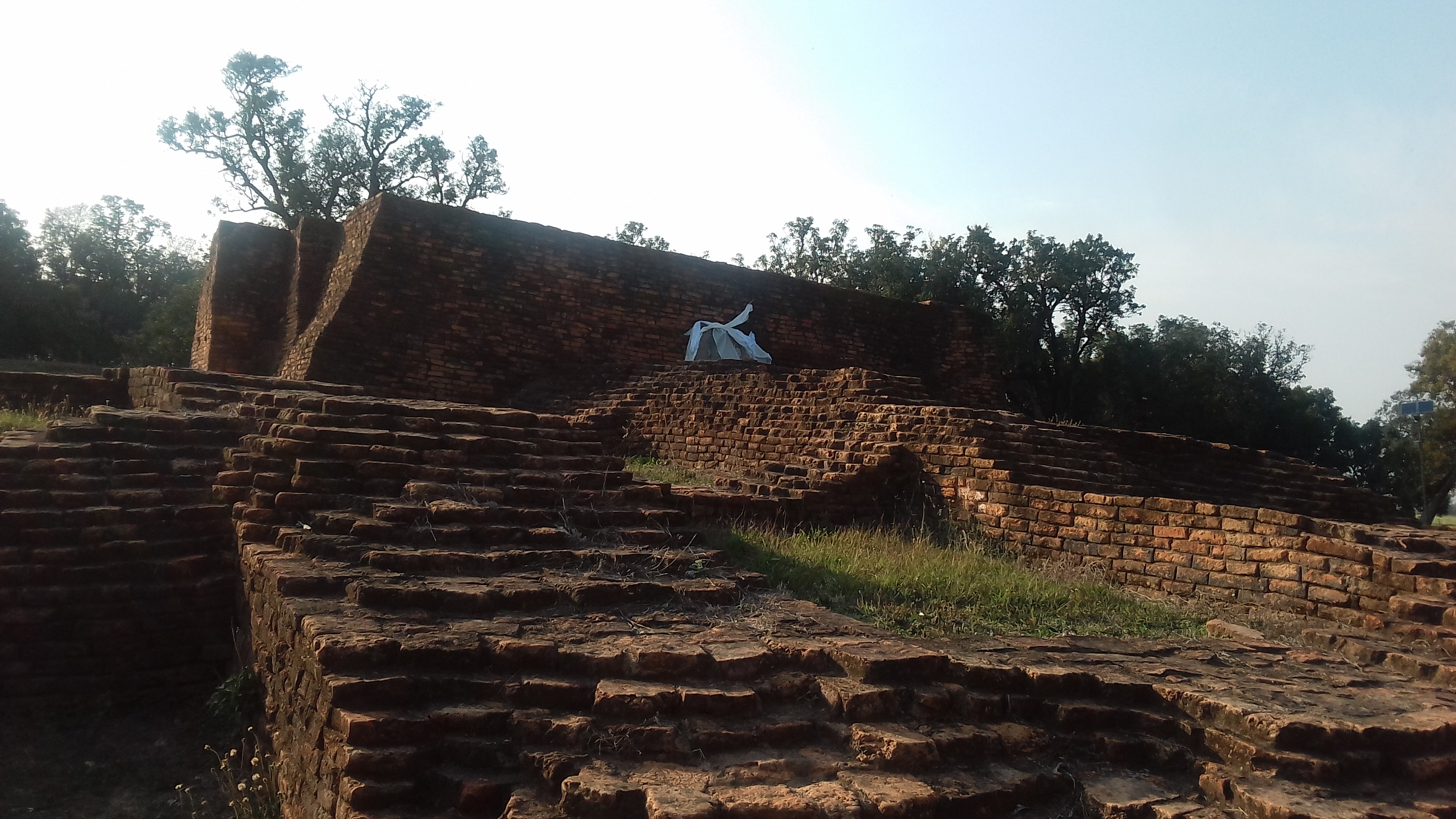
Kapilvastu
Kapilvastu, also known as the city of the Shakya kingdom, is a sacred site where our Lord Buddha, Shakyamuni, performed many significant deeds. It is the place where he entered the womb of his mother, Maya Devi, and where he lived as a prince before renouncing worldly life. Located about 29 kilometers from the Lumbini Garden, this city was once the capital of the ancient Shakya kingdom, which was part of the Indian subcontinent and is now part of Nepal. Historically, it was a major center of the Shakya clan and played a pivotal role in the life of the Buddha. Kapilvastu was originally the capital of the Shakya kingdom, where King Suddhodana, the Buddha's father, and his ancestors ruled. During the Buddha's lifetime, he observed the five visions and descended from the Tushita heaven to enter his mother's womb in the form of a white elephant with six tusks. Later, he was raised alongside many other Shakyan princes, learning various arts and sciences. He married Yasodhara, daughter of Supprabuddha, and lived a life of luxury as a prince until he renounced worldly life at the age of 29. Eventually, after becoming the Buddha, he returned to Kapilvastu to meet his father and son, marking significant events in his life. In ancient times, Kapilvastu was founded by a lineage of kings that dated back thousands of generations. One of these kings, Okkaka, had four sons and four daughters with his first wife and a son named Dighavu with his second wife. However, due to the manipulation of deceitful ministers, the throne was given to Dighavu, and the other siblings were exiled. The eldest brother, Prince Mahanama, led his siblings to a forest near the Bhagirathi River, where they built a new settlement. The sage Asita, seeing their plight, advised them not to intermarry, which they heeded, resulting in a large population of descendants. The eldest brother, Mahanama, requested Asita's permission to build a palace in the forest, which was granted. This marked the beginning of the Shakya kingdom, with Kapilvastu as its capital. The Shakya kingdom flourished under the rule of King Suddhodana, the Buddha's father, and was known for its prosperity and strong governance. During the Buddha's time, the kingdom had a population of about 50,000 Shakyans and 500 ministers. However, the kingdom faced significant challenges, including attacks from neighboring kingdoms. The Kosala king, Vidudabha, son of King Pasenadi, launched three assaults on Kapilvastu, ultimately leading to the destruction of the city and the death of many Shakyans. This marked the end of the Shakya kingdom's dominance. Today, Kapilvastu remains a sacred site for Buddhists worldwide, symbolizing the early life of the Buddha and the rich history of the Shakya kingdom. It serves as a reminder of the Buddha's teachings and his journey towards enlightenment. Despite its historical decline, Kapilvastu continues to be a place of pilgrimage and spiritual significance, attracting visitors from around the globe.
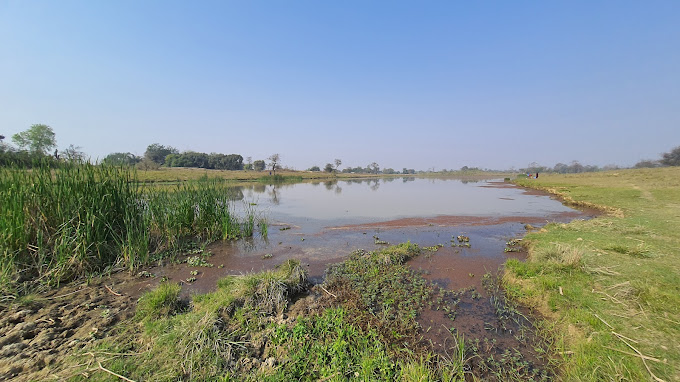
Sagarhawa
The city of Kapilvastu is also known as the site where King Virudhaka, also known as King Pasenadi's son, massacred the Shakyas. Approximately five kilometers north of Kapilvastu lies a large area called Sagarhawa, where in 570 BCE, King Virudhaka led his army to slaughter over 7,700 Shakyans. Additionally, he took over a thousand Shakyan women as captives, cutting off their hands and eventually killing them. There is a small mound known as the "Hand Mound" because it was used as a burial site for the severed hands. The area also contains a damaged stupa, unique rock carvings, a temple, and the remains of the ancient Shakyan city. The site was excavated by German archaeologist Dr. Alois Anton Führer and later by Nepalese archaeologist Babu Krishna Rana. During these excavations, they found sixteen stupas, two golden statues with three umbrellas, two golden serpent figures, a silver vase, and various clay vessels. However, the current whereabouts of these artifacts are unknown. This historical site remains significant as it marks the tragic end of the Shakya kingdom and serves as a reminder of the events that shaped the region's history
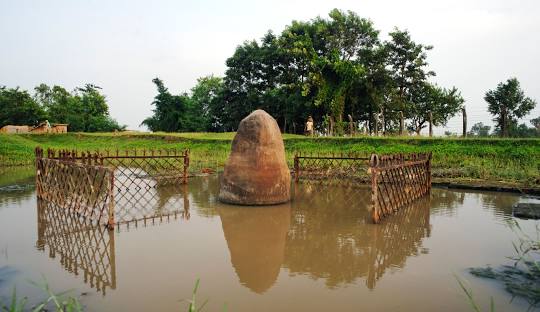
Gotihawa
To the south of the Shakya city of Taulihawa, approximately four kilometers away, lies Gotihawa, a city associated with the end of the Buddha’s wheel of Dharma. This sacred site contains a stupa marking the place where the Buddha’s wheel of Dharma ceased to turn, and where he met with his father, King Suddhodana. Additionally, the site features a tall stone pillar with a lion capital, believed to have been erected by Emperor Ashoka. In 1898, archaeological excavations were carried out by Dr. Führer and other researchers from Germany and India. The Ashokan pillar was excavated to a depth of 68 feet, but its base was not found, leaving its exact height unknown. During the excavation, human bones and ashes were discovered near the pillar. Dr. Führer speculated that these remains could belong to Buddha Kanakamuni (a previous Buddha), whose relics are said to be enshrined at this site. This led to the declaration that Gotihawa is one of the oldest stupa sites in the world. Gotihawa is believed to be both the birthplace and the site of parinirvana (final passing) of Buddha Kanakamuni. The site holds immense historical and spiritual significance as a place where teachings on liberation from suffering were imparted. It remains an important pilgrimage destination for Buddhists worldwide due to its association with this ancient Buddha and its archaeological importance as one of humanity’s oldest known stupa sites.
The Birthplace of Buddha Kanakamuni and the Pillar
East of the city of Kapilavastu lies Sisahaniya, which covers an area of 700 feet. Many ancient artifacts have been discovered from this city, and many researchers, both domestic and foreign, have identified this place as the birthplace of Buddha Kanakamuni. Eight kilometers from Tolihawa in Kapilavastu, there is a pillar in Nigalihawa. This pillar was erected by King Ashoka in commemoration of Buddha Kanakamuni. It was discovered in 1895, and later the pillar was damaged and broke into two pieces. The upper fragment is 15 feet long and has the numbers 1234 and 1234 inscribed on it, which are said to have been written when the pillar was originally erected. It originally had ancient Burmese script and peacock designs, while the inscribed mani mantra was added later. In the surrounding area, there are many ruins including those of Kanakamuni's city of Nigalihawa and his palace called Akora Kot.
Ruins of the Palace of Buddha Kanakamuni
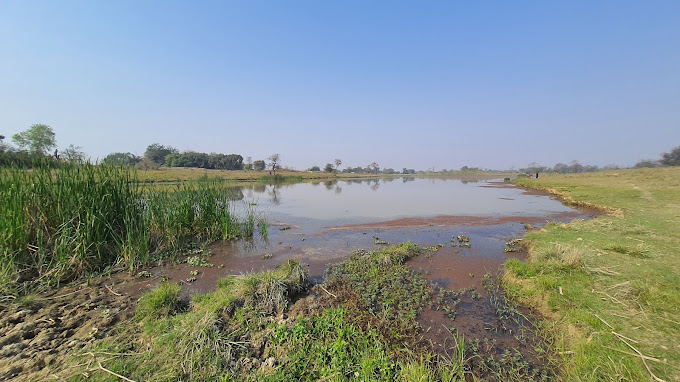
Three kilometers east of Nigalihawa in southern Nepal, there are ruins of Kanakamuni Buddha's palace called Arura Kot. To the south of the palace, there remain traces of an ancient wall over seven inches high. Inside the palace grounds, there are also remains of a well. This area was previously a forest. Dr. Hajime Nakamura from Japan conducted research and cleaning of the site. The Muslims from the nearby village of Jagti tell stories that during special occasions at night, light emanates from the palace and various objects can be seen, but no one can take these objects as they disappear on their own, which is considered miraculous.
Lumbini: The Birthplace of Lord Buddha
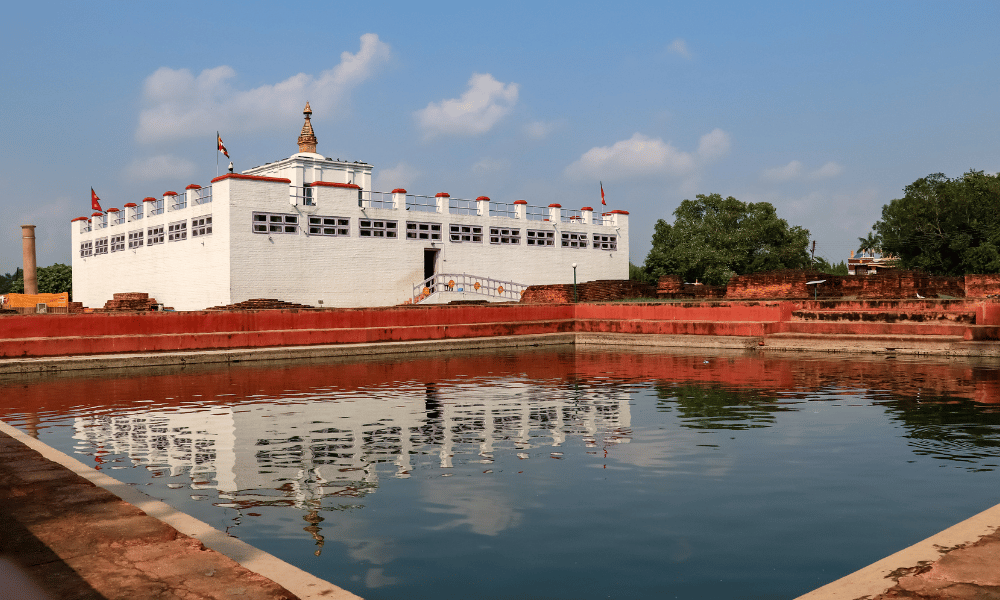
Lumbini is one of the four major Buddhist pilgrimage sites and is the sacred place where Buddha Shakyamuni, was born. According to the Vinaya texts, Queen Mayadevi's father, Suprabuddha, had a pleasure garden called Lumbini Garden. When Queen Mayadevi was about to give birth, she felt the need to visit this garden. King Shuddhodana sent a message to Suprabuddha requesting that the garden be cleaned and prepared. After the garden was prepared, the queen and her attendants went there, and Queen Mayadevi gave birth to Prince Siddhartha while holding onto the branch of an Ashoka tree. Immediately after his birth, the infant took seven steps in each of the four directions and proclaimed, "I am supreme in this world," making this a wondrous sacred place. At this site, there is a temple dedicated to Buddha's mother Mayadevi, a Bodhi tree, a sacred statue, and a pillar erected by King Ashoka when he visited the site in the twenty-first year of his reign. The pillar clearly bears an inscription stating "Buddha was born here." There are also ponds and many ruins of ancient monasteries nearby that can be seen as shown in photographs. In 1995, a Japanese archaeological team discovered underground a statue of the Buddha with his finger pointing to the sky, a clay statue of Prince Siddhartha with Queen Yashodhara, and a large pillar. Lumbini contains many ancient monastery ruins as well as numerous remains of stupas. This sacred site is currently located 27 kilometers from Sanauli, on the border between India and Nepal.
The Stupa of Namdak Drong, Kesariya
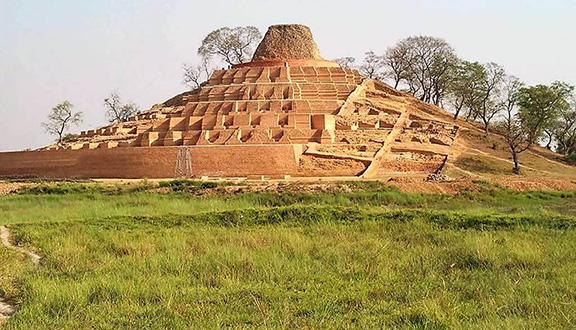
Namdak Drong Stupa is the special place where Buddha Shakyamuni, developed renunciation from samsara and was ordained. This site is located 116 kilometers from Patna city in Bihar state and 59 kilometers from Vaishali. In the local language, Namdak Drong Stupa is called Kesariya, which means something like "removal of hair." Later, an ancient guidebook was discovered which states: "Two krosas (about 4 miles) from there is Kesariya, the place where the prince was ordained. There is a stupa with many doors, having three tiers. All are of equal dimensions, measuring six fathoms around. On three sides are stone statues of the Buddha. In the western opening, large enough for one person, there are eight sites carved in relief on a stone slab. In the center, the Buddha image is about one cubit high. The vase and its wrapping are encircled by four fathoms. The small sides of the vessel have three faces each, making twelve faces. It is surrounded by more than thirty smaller stupas with thirteen wheels and a pinnacle. To the east are three Gandoli (possibly shrines) of Avalokiteshvara, and two courtyards serve as resting places for guests." Since the description in this ancient historical account matches the current ruined stupa, it is certain that Namdak Drong is indeed this Kesariya. About 71 kilometers from Namdak Drong village is a place called Bhethi, which was formerly the land of Videha. It is said that the Buddha visited and stayed there, and that King Ajatashatru's mother was also from there.
The Stupa and Ashoka Pillar of Lauriya Nandangarh
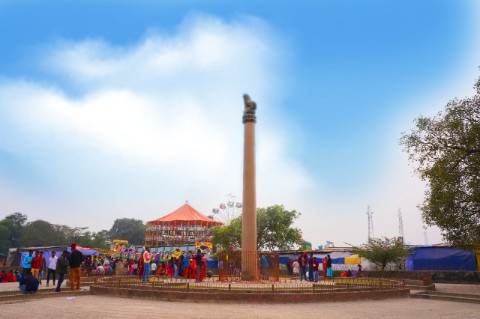
In Lauriya Nandangarh of Bihar state, there is a large stupa, and, near the stupa, there is an Ashoka pillar topped with a lion capital that has inscriptions on its surface. The exact identification of this site is not clear. Some suggest it might be Namdak Drong, but there are reasons to believe that the place where the Buddha was ordained, Namdak Drong, is actually Kesariya as mentioned earlier, and it is currently identified as such. The site is now known locally as "Asoka Pillar at Lauria Nandangarh." It is located 223 kilometers from Patna city, and 97 kilometers from Namdak Drong (Kesariya).
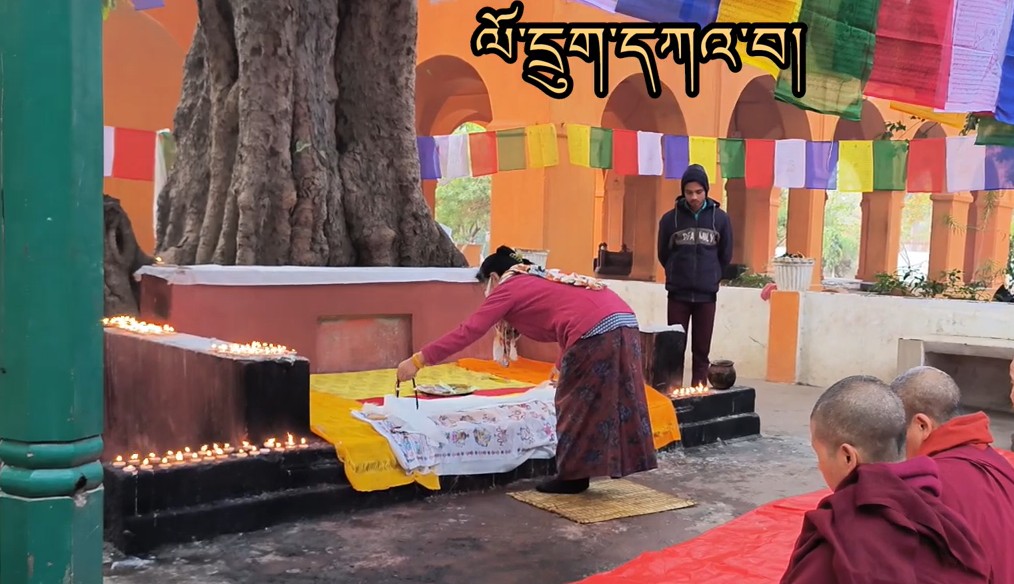
The Place of Six Years of Austerities
The place where the Buddha practiced austerities for six years is located on the banks of the Nairanjana River, which flows from south to north on the eastern side of Bodhgaya, as described in the texts. It is situated in a sandy area by the roadside east of Bodhgaya, a short distance after crossing the Nairanjana River. In ancient times, there was a stone statue of the Buddha at this site showing his emaciated form with clearly visible veins and spine, facing west. There was also a statue of a cowherd with a stick inserted in his ear. There was a stupa at the place where King Shuddhodana's five hundred attendants tethered their horses. After arising from his austerities, the Buddha went to a cremation ground about half a krosa (approximately one mile) to the southwest of Bodhgaya, where there is a stupa marking the place where he took cloth from corpses and dyed it. About half a krosa to the east of that is a larger stupa marking the place where he washed his robes. From there, he went to the southern side of Bodhgaya where there are stone steps and a stupa marking the place where he bathed and shaved his head. It is said that all old flowers are discarded there. Currently, there are many ruins of stupas and monasteries, making it difficult to identify each specific site. However, the early history tells that after Prince Siddhartha was ordained, he went among the sages like Alara Kalama and others of the Vedic tradition. He practiced whatever austerities they practiced, but twice as intensely, which amazed the sages who called him "the Great Ascetic," earning him this renowned title. Later, King Shuddhodana, concerned that his son was wandering without attendants, sent five hundred attendants—three hundred servants and two hundred maidservants under Queen Prajapati—to serve him. The prince, thinking it was not good to have so many attendants in a secluded place, sent most of them back. The Group of Five (Kaundinya and his companions) did not return and remained with the Bodhisattva practicing austerities. The Bodhisattva sat in the lotus position under a tree in the forest by the Nairanjana River and practiced austerities. Initially, for about two years, he ate only seven grains of rice daily. For the next two years, he ate only one fruit per day. For the final two years, he ate nothing at all. Thus, for six years he practiced austerities and entered into deep meditation at this place.