Benchen Phuntsok Dhargyeling
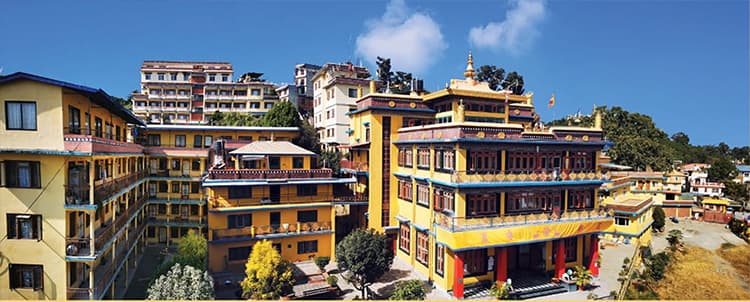
Benchen Phuntsok Dhargyeling Monastery was founded in the 17th century in upper Do Kham region of eastern Tibet by Sangye Nyenpa Tulku IV Gelek Gyatso. In exile, in 1986, the powerful Sangye Nyenpa Rinpoche constructed a new temple complex with sacred structures at the site near Swayambhunath in Nepal. This includes the Yangleshö retreat center Woesel Ling, the nuns' retreat center Arya Tara Ling, and the primary school Khyenrab Pe Tsal Ling. In 2004, a new dialectics college, Nangten ThoeSam Ling, was constructed near the Asura cave in Yanglesho. Regarding education, in the monastic college, they study and recite the tantras from both kama and terma traditions of the Nyingma and other schools. They also learn dance, geometry, and music; torma making and ritual arrangement; and the practices of generation and completion stages. In addition to these, they engage in study and contemplation of the major texts according to their individual capacities. Furthermore, each year from the first lunar month's prayer festival, they perform various ritual practices based on either painted or sand mandalas from the different tantra classes. In the retreat center, they practice the Six Yogas of Naropa as the path of methods and Mahamudra as the path of liberation, along with the generation and completion stages and retreat practices of the Three Roots deities for a period of three years and three months, starting with the Mahamudra preliminaries. In the debate college, they primarily study the eight major texts of sutra and tantra of their own tradition, as well as grammar, poetics, and historical works such as chronicles and histories of Buddhism. Similarly, the Sangha collectively practices the three foundations of Vinaya according to the teachings of the Buddha. Additionally, they perform the great tenth-day ritual dance based on Guru Chöwang's practice of Guru Sangdus. The Chokling tradition's ritual dance and four-activity fire offering during the major Phurpa retreat are also alternately practiced. From the unique traditions of the Drukpa Kagyu lineage, they perform the seven-day practice and ritual dance of the Glorious Wisdom Protector, along with the torma offering and four-activity fire offering. Currently, under the leadership of the powerful adept Sangye Nyenpa Rinpoche and Kyabje Tenda Chungsi Rinpoche, there are approximately 456 monks residing in the monastery.
Benchen Phuntsok Dhargyeling, P76Q+3MX, Chauni Hospital Marg
Kathmandu, 44600
Kagon Tshechhogling Monastery
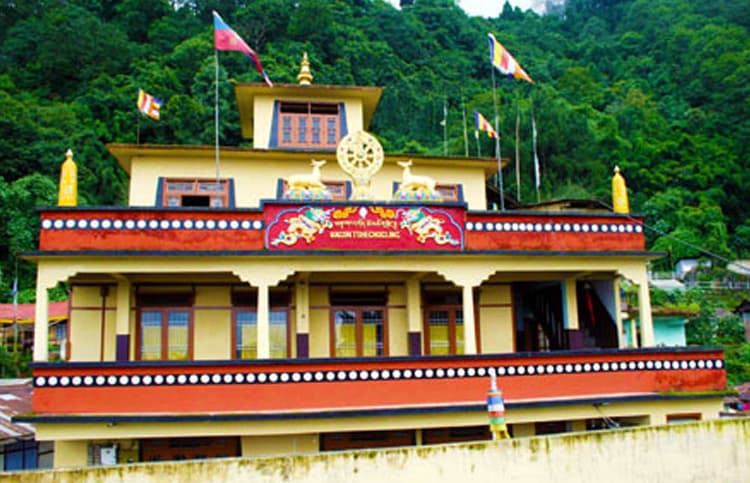
Kagon Tshechhogling Monastery was founded in 1770 at lower Gro mo, a region that lies at Tibet and Indian border region, by the Bka’ rgyud reincarnation Skyabs rje bstan ’dzin nyi zla rin po che. The monastery is part of the incomparable Dwags po bka’ brgyud that continues the religious lineage of the Stod ’brug of the true transmission of the glorious ’brug pa. In 1959, due to the forceful oppression of the land of religion by China, the monastery was reduced to dust as was the case with most of the monasteries in Tibet. A considerable number of monks from the monastery along with the 7th Bka’ brgyud reincarnation Skyabs rje ’jigs med ngag dbang bstan pa’i rgyal mtshan had flee Tibet. In India, at the residence of an old monk of Bka’ brgyud tshe mchog gling, the monks regularly congregated and observed rituals such as Tshe bcu and nyer lnga. In that way, they spent many years. By the grace of His Holiness the Dalai Lama and the support of the generous devotees, the holder of ’brug pa bka’ brgyud religious lineage monastery was established at Gangtok, the capital city of Sikkim. In 2005, during the visit of His Holiness the Dalai Lama to Sikkim, he has visited the monastery and gave advice and guidance. Today, there are 21 monks at the centre.
Kagon Tsechokling , J.N. Road Chendmari P.O. Raj Bhawan
Sikkim, NA
Drikung Druzin Thekchokling or Nyungney Lhakhang
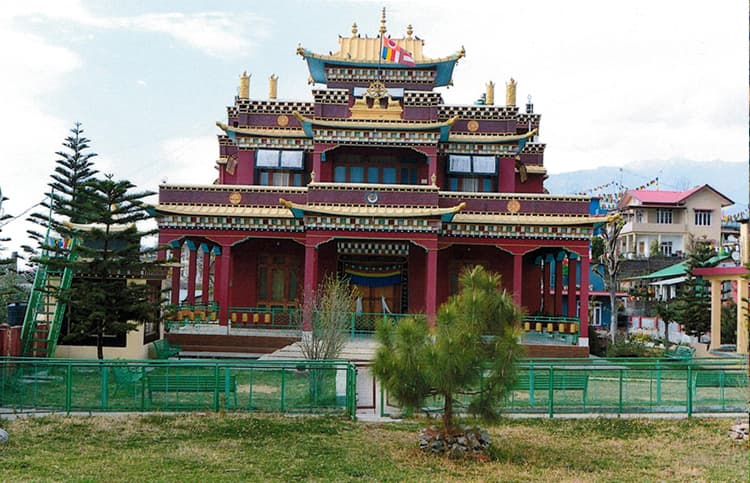
The Drikung Druzin Thekchokling or Nyungney Lhakhang was established at the request of the late Yore Tsang family member Tsundue Senge from the Bir Tibetan Society. He humbly requested His Eminence Wontrul Rinpoche for a place of refuge for both this life and the next in that area. He sought permission to hold gatherings for prayers for the long life of His Holiness the Dalai Lama, the leader of world peace, and for other religious activities. Rinpoche graciously donated the land free of charge. In 2008, the deceased himself raised funds and constructed the chapel. His Eminence Drikung Chetsang Rinpoche, illuminator of the practice lineage, was invited to inaugurate the chapel. The local people annually observe fasting practices and accumulate merit on auspicious days and occasions. Thus, it continues to be a place of religious activity.
Drikung Nyungney Lhakhang, Drongtoe Rd, Bir Colony, Chaugan
Himachal Pradesh, 176077
Nehnang Phuntsok Choeling
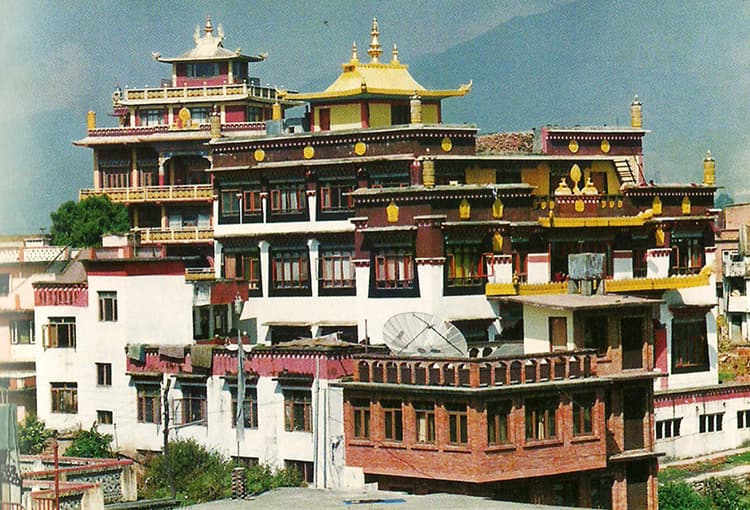
Nehnang Phuntsok Choeling was founded by the first Zhwa dmar rtogs ldan grags pa seng ge at Stod lung bde chen rdzong. Karma pa chos grags rgya mtsho had enthroned Dpa’ bo chos dbang lhun grub as the dharma lord of the Sras gro bo lung monastic seat of the Bka’ rgyud mar pa lo tsA ba father and spiritual son. The 9th reincarnation of Dpa’ bo chos dbang lhun grub administered Gnas nang monastery of Stod lung bde chen rdzong near Lhasa. Before the 9th reincarnation, the centre was administered by the successive reincarnations of Zhwa dmar. The centre in exile was founded by the 14th Dpa’ bo gtsug lag smar ba’i dbang phyug near Bya rung kha shor stupa in Nepal in 1985. Today, under the guidance of the 15th Dpa’ bo gtsug lag, transmission bestowment is being taken place. There are 25 monks at the centre.
Nehnang Phuntsok Choeling , P9F4+38,
Kathmandu, 44600
Pal Rigon Thupten Samdup Choekhorling
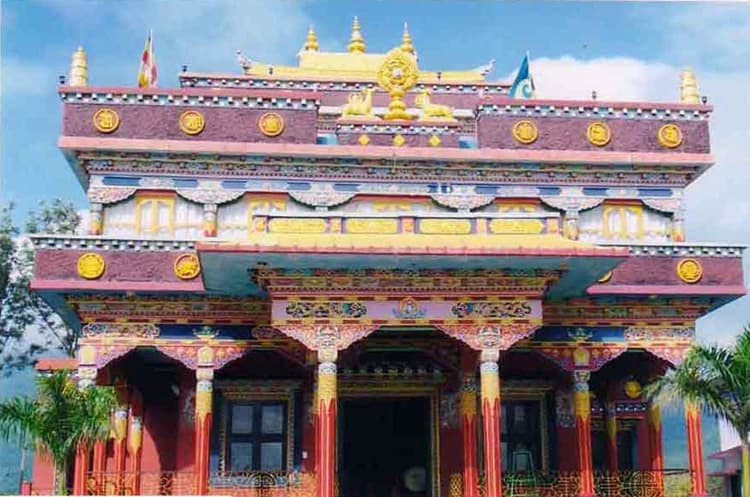
Pal Rigon Thupten Samdup Choekhorling as foretold by Rgyal dbang Karma pa bdud ’dul rdo rje, was founded by 4th Ri pa bag yod in 1765 on an elephant shaped mountain at lower ’brong of Be hu, which is part twenty five Be hu under the king of Nang chen of Kham. The 8th Ri pa bag yod Karma bshad sgrub chos kyi seng ge gzhan phan mtha’ yas rin po che founded the replica of the monastery in 1994 at Kollegal in south India. Today, there are monks both from Tibet and India numbering 22.
Pal Rigon Thupten Samdup Choekhorling, V- Village, Kollegal Taluk, Dhondenling Tibetan Settlement
Karnataka, 571457
Zigar Tashi Thubten Chokhor Gephel Ling
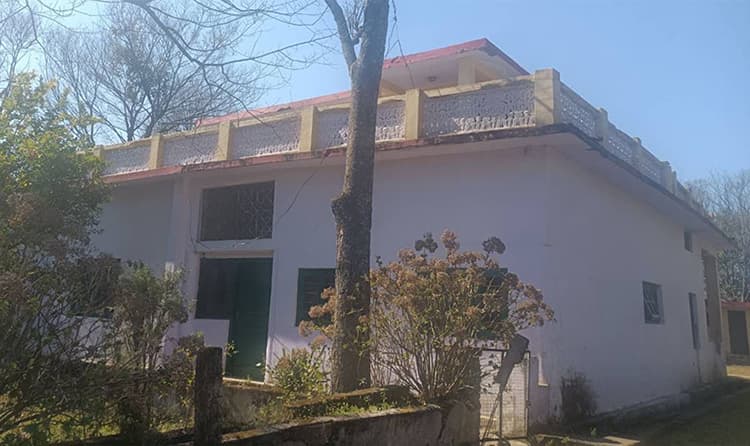
Zigar Tashi Thubten Chokhor Gephel Ling was established in 1974 by the 9th Zigar Rinpoche Jigme Mipham Tenpai Nyishon, recognized by His Holiness the 16th Gyalwa Karmapa, in the Dege area of Bir. The local residents of Chauntra donated land for the monastery, which became the first exile seat. From 1980, the monastery was relocated to the holy site of Tso Padma, where a new monastery was constructed. Four monks remain permanently in the original Zigar Monastery in Dege, Bir, continuously performing rituals, annual festivals, and daily practices in the protector chapel.
Zigar Drukpa kagyug monastery P.O. chauntra, Mandi
, 175032
Khamgar Druk Dharmakara College
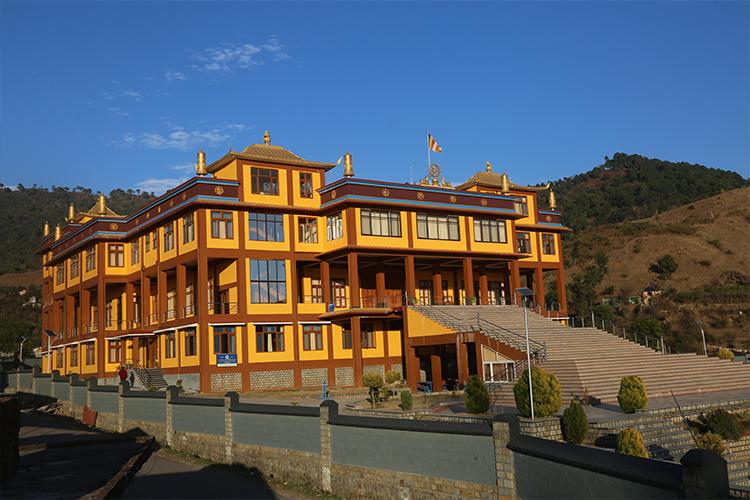
The Shedra Thubten Lekshe Jungnay, or Khamgar Druk Dharmakara College , maintained its tradition of teaching and learning in Kalimpong and Dalhousie through Khenpo Tsondru, Khenpo Chodar, and Khenpo Rinchen after Khamtrul Rinpoche and his entourage arrived in exile in India. Later, Khyentse Yeshe Rinpoche provided support for the construction of the shedra temple and monks' quarters at Khamgar Tashi Jong. Gradually, many students gathered from Tibet, Bhutan, Ladakh, Garsha, Kinnaur, Spiti, Tamang, and Sherpa communities - all areas traditionally connected to the Drukpa Kagyu lineage. The teaching tradition continued under invited scholars like Khenpo Khedrub and Khenpo Rinchen. As the student body grew, a new campus became necessary, and in 2019 the shedra relocated to new facilities. Currently, about 211 resident monks study the primary texts of the Omniscient Guru (Kunkhyen Lama), supplemented by the works of Buton Rinpoche and many Indian and Tibetan scholars and siddhas. Except for two months each year, all teachers and students engage in continuous study and training.
T.C.C. Tahi Jong P.O. Taragarh Bheth Jhikli, , Kangra
, 176081
Palpung Yeshi Rabgyeling Nunnery
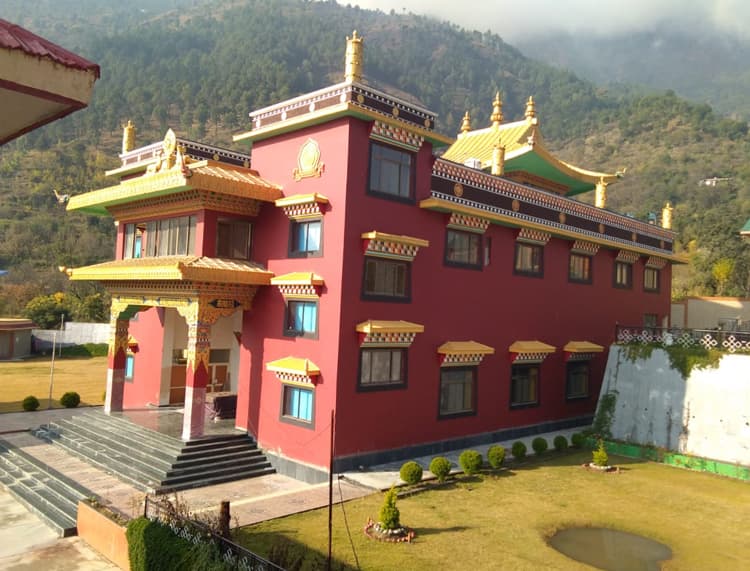
Palpung Yeshi Rabgyeling nunnery was newly constructed in 2007 in the Kul Bhajor area of Himachal Pradesh in northern India by the monastic seat organization, in accordance with the vision of Jamgon Dorje Chang. It was named Palpung Yeshe Rabgye Ling. Starting in 2013, with the support of the monastic seat administration committee and the efforts of all staff members, the construction of the main temple, upper-story residence, nuns' quarters, and administrative buildings was completed in 2018, including both the structure and its contents. Currently, around 175 nuns are engaged in study, ranging from learning to write and read to English, Hindi, and mathematics up to the third grade. They also study various subjects and the Five Great Treatises of Buddhist Logic up to the ninth grade. Additionally, there are full arrangements for nuns to specifically attend the monastic seat's Institute of Higher Buddhist Studies for Medicine and Astrology, where after completing eight years, they can specialize in condensed medical studies or become Kachuwa (Tenth-Level Scholars). According to the ancient traditions of Palyul, rituals, practices, and musical instruments such as blowing, beating, and plucking; as well as torma-making and decoration arrangements, and so forth. At the retreat center Jangchub Samten Ling, they practice the guru yoga of Marpa, Milarepa, and Dakpo Lharje; and the approach and accomplishment practices of the Three Families of Vajrakilaya, Chakrasamvara, and Guhyasamaja. They engage in the profound path of the Six Dharmas of Naropa and the Six Dharmas of Niguma from the Shangpa tradition of the Golden Dharmas, among others, for three years and three months according to the visual lineage of the seat. After nuns have completed their study of rituals, practices, and major texts according to the visual lineage, they are given positions such as chant leader, teacher, and abbess, which are equivalent to those of the monastic community at the seat. This nunnery is flourishing under the care of the administration of Palpung Sherab Ling and the labrang (monastic estate).
Palpung Yeshi Rabgyeling Nunnery, Village Mashgoan, P.O, Bajaura, Kullu
, 175125
Pal kagyud Shedrup Tashi Dhargye Phuntsokling
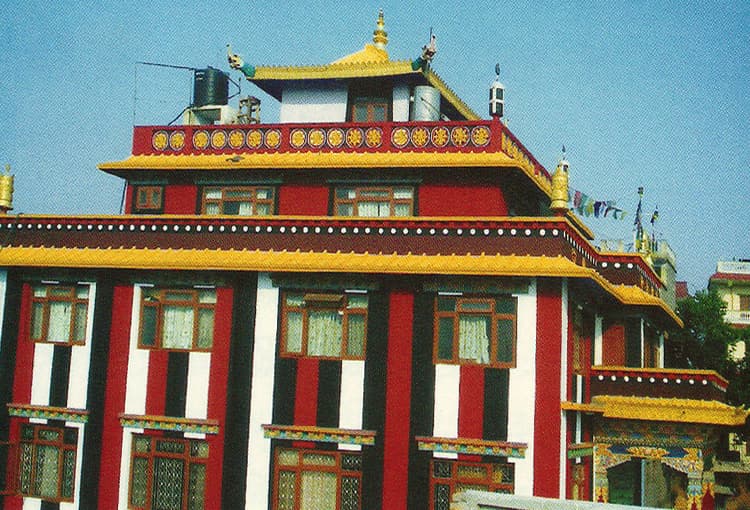
Pal kagyud Shedrup Tashi Dhargye Phuntsokling was founded by the dharma lord of Byang stag lung yar thang, the 4th Rje btsun sngas rgyas tbon at Dbyi shod ri bo che of Kham region in 1276. Since then, the monastery was split into two as upper Stag lung and lower Stag lung. For the relics, there are a bone ornament of nA ro, a cap and Phyag dril of Jo bo rje, a statue of Rje phag mo grub pa and a silver statue of Stag lung thang pa rin po che covered in thin woolen cloth. There are around fifty thousand volumes of sacred text written purely in gold and silver as speech support. For mind support, there are around hundred stupas made out of gold, silver, sandalwood and clay. The monastic seat of Kham ri bo che in exile was established by the 7th ’phags mchog, bstan ’dzing ’jigs med grags pa and the members of the Kham ri bo che religious organization at Ram me kris near Bya rung kha shor stupa in Nepal in 2000. As per the report of 2011, there are 52 monks at the centre studying the traditional dharma conduct, activities and practice.
P9JF+62H, , Kathmandu
, 44600