Sera Mey Monastery
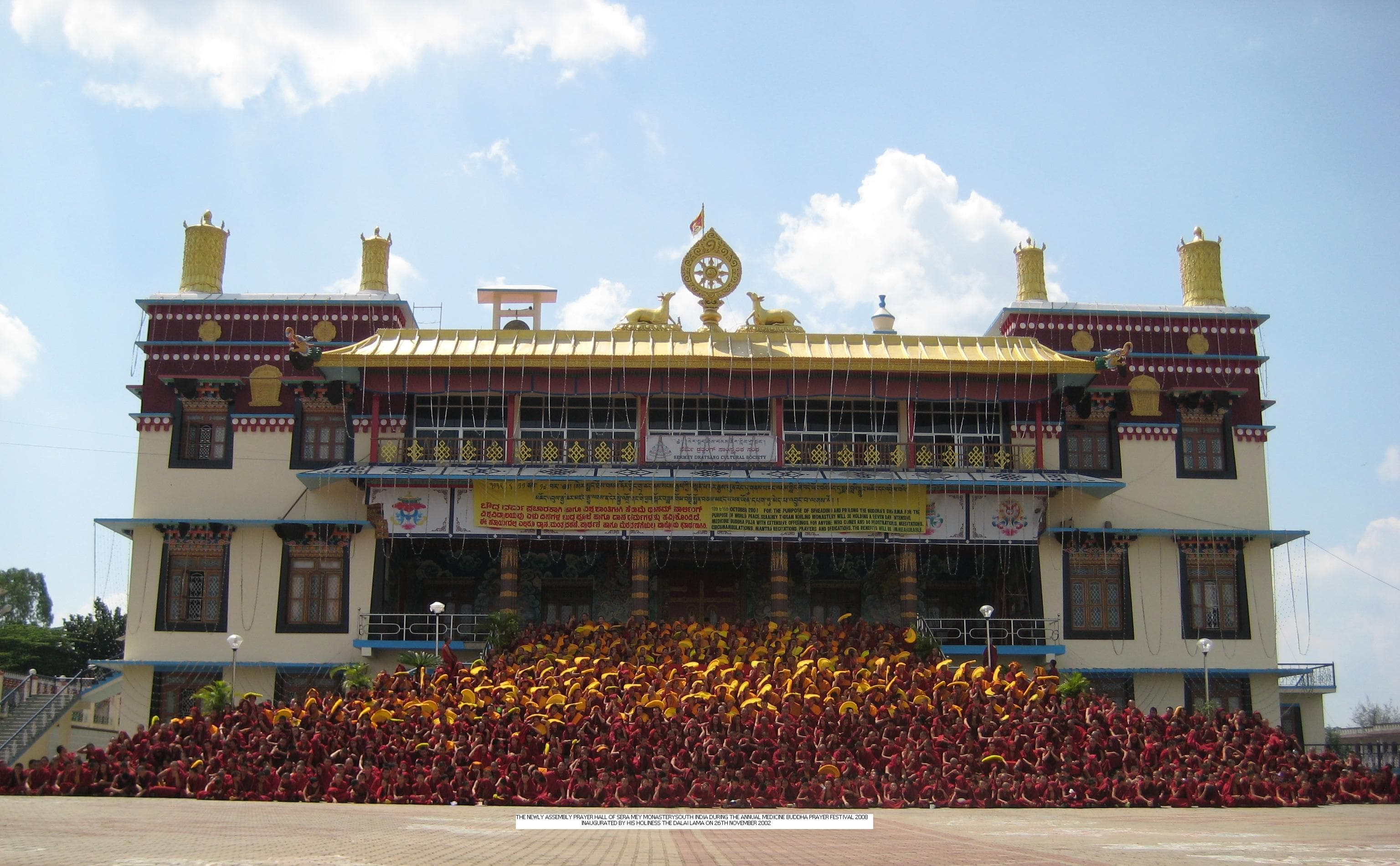
Sera Mey Monastery was founded in 1421 by Kunkhyen Jangchub Bumpa Pelzangpo, a direct disciple of Je Tsongkhapa. From its founding in Tibet, the monastery produced a continuous stream of accomplished scholars and practitioners who maintained both the general Buddha's teachings and particularly Je Tsongkhapa's precious doctrine. As the monastery grew, it was divided into sixteen residential sections (khangtsens). After the changes of 1959, many monks from the monastery managed to escape to India. They initially settled at Buxa Chogar, where despite difficult conditions with health and terrain, they maintained their traditional religious activities for several years. On December 13, 1963, they relocated to Bylakuppe, Mysore, where the senior monks cleared forest land and worked hard to construct living quarters and assembly halls. In 1974, they built assembly halls for both Sera Jey and Sera Mey monasteries. In 1982, they completed the main assembly hall, and in 1987, they finished constructing Sera Mey's temple complex with its sacred objects, leading to improvements in both studies and administration. As student numbers increased yearly, they undertook another expansion project. In 2002, they completed a new temple complex, which was inaugurated by His Holiness the Dalai Lama in a ceremony attended by over ten thousand people, including Jangtse Choeje Rinpoche, former abbots of major monasteries, lamas from various traditions, the Chief Minister of Karnataka, the Tibetan Minister of Religion and Culture and the Tibetan masses living in the settlements. In 2007, they renovated the debate courtyard to address issues with size and monsoon leakage. Currently, the monastery has 1,327 monks who maintain pure monastic discipline while studying the works of Indian and Tibetan masters, particularly Je Tsongkhapa's writings, along with the monastery's unique textual traditions. They also study traditional subjects like history and grammar, engaging in the three activities of teaching, debate, and composition to preserve and promote Je Tsongkhapa's unified teachings of sutra and tantra. The monastery's educational curriculum consists of a comprehensive 18-year program studying the Five Great Texts and their commentaries, structured as follows: First year begins with: Three levels of Collected Topics (Dudra) including study of colors and basic logic, Chone Drakpa's text on Mind and Logic. Then progresses through various levels of: Perfection of Wisdom (new and old texts, chapters 2 and 4), Supplementary texts, Madhyamaka Philosophy (new and old levels), Vinaya (foundation and advanced) and Abhidharma (first four and last four chapters). Upon reaching the Geshe Lharampa level, students take examinations in Abhidharma in the second Tibetan month and Vinaya in the eleventh month. In 1976, the monastery established a modern school recognized by the Karnataka state government. Initially classes were held under trees and temporary shelters. The school aims to preserve unique Tibetan knowledge while also providing modern education. It receives support from international organizations and donors to provide for students' meals, healthcare, books and educational materials. In 1979, when Khenpo Jampa Dhonyod became abbot, the monastery provided land and buildings for the school. Tables, chairs, textbooks were acquired and teachers were invited from outside, leading to steady improvements. This development was possible mainly through support from international organizations and donors, as well as the dedication of successive abbots and former abbots. The monastery continues to expand its services with schools for young monks, medical facilities, dining halls, guest houses and shops. Following His Holiness the Dalai Lama's constant guidance and advice, the monastery works to overcome challenges and make positive progress in both religious and secular affairs.
Sera Mey Monastery, Sera Lama Camp, Bylakuppe
Karnataka, 571104
Thekchenling Monastery
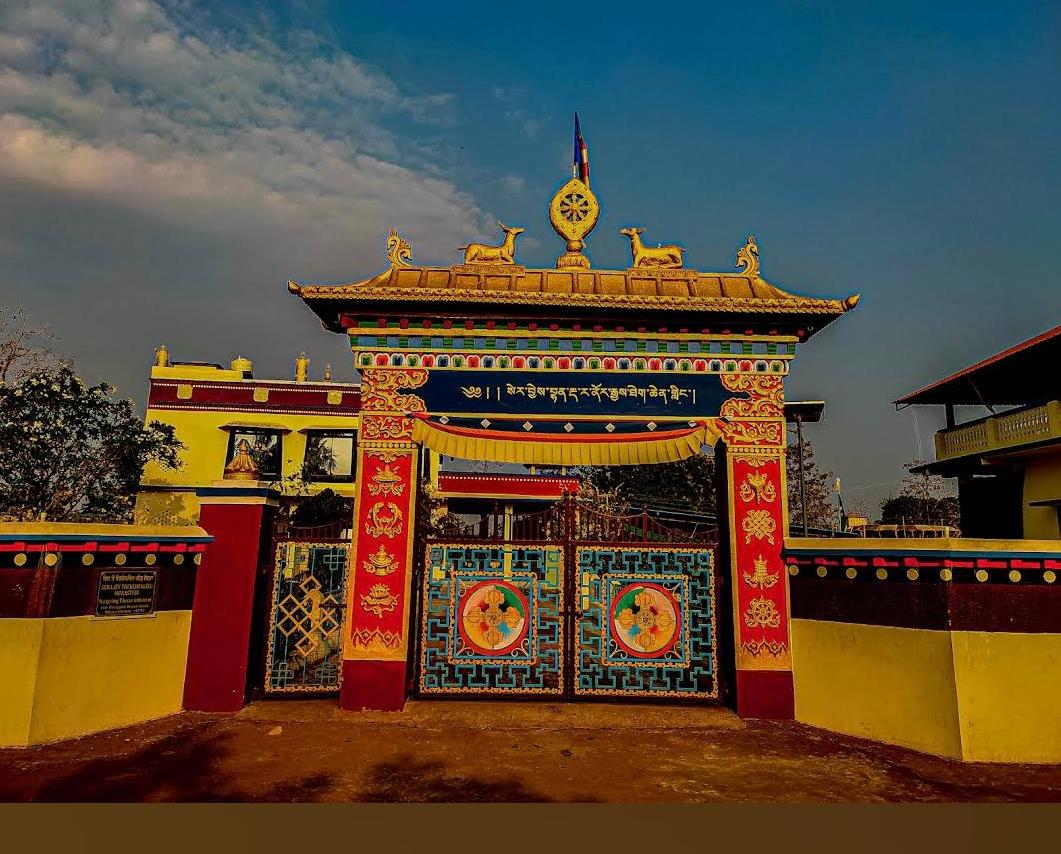
Thekchenling Settlement Monastery was built in 1975 through the collective efforts of all residents of Bhandara Norgyeling Tibetan settlement and its monks. The monastery's name was bestowed by His Holiness the Dalai Lama during one of his visits. The monastery houses about 8 monks who were relocated here by the Tibetan government (in exile) from the scattered monks of the Three Seats (Gaden, Sera and Drepung) in Dalhousie. They maintain the traditional three basic monastic rituals without interruption, and annually perform ceremonies such as Kunrik and Pachig Dagnjuk. The monastery's main treasure is a Kangyur (Buddhist canon on Tibetan paper), which the settlement residents collectively read and purify annually during the Miracle Month (first month of the Tibetan calendar).
Thekchenling Monastery, Tibetan Settlement, Camp # 2, P.O. Pratap Garh, Bhandara
Maharashtra, 441702
Gaden Jangtse Thoesam Norling Monastery
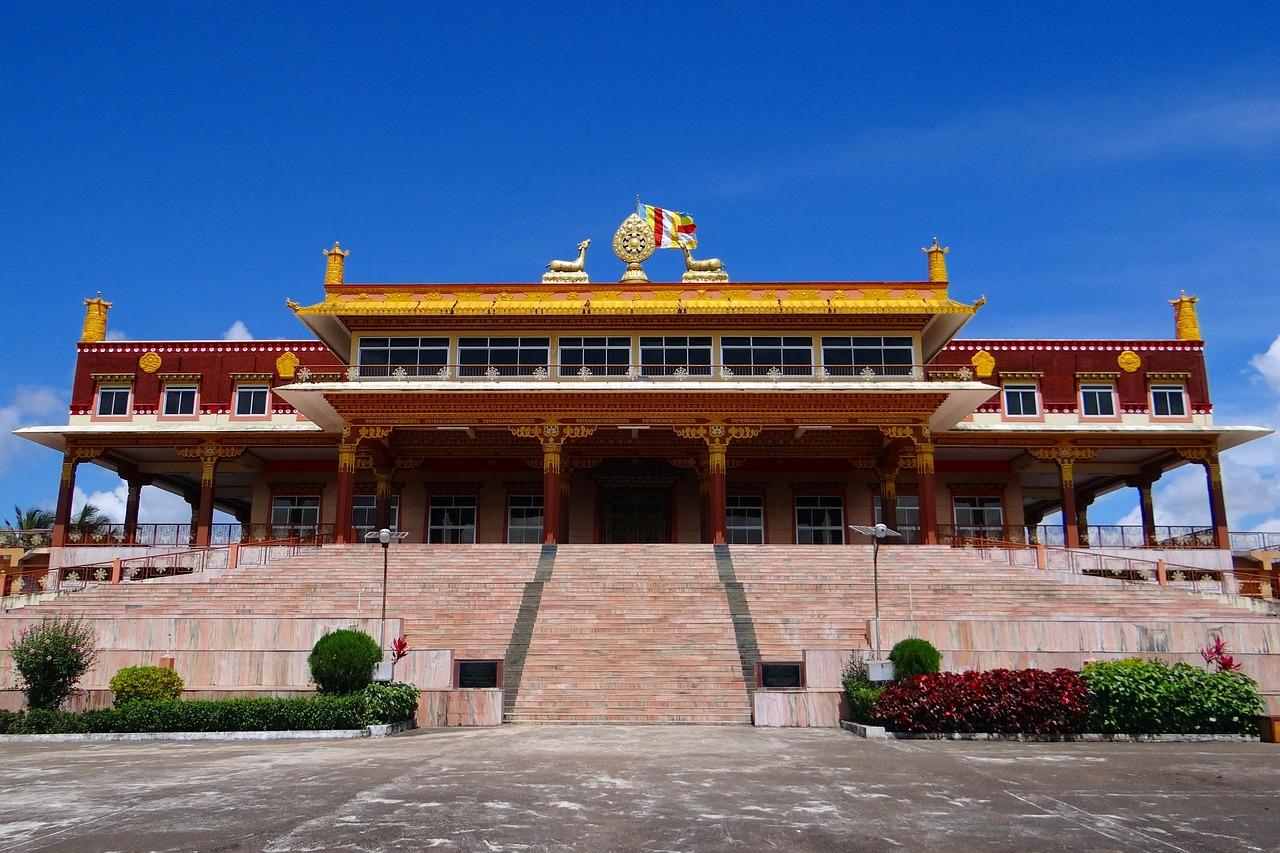
The famous Gaden Jangtse Thoesam Norling monastery is part of the great monastic seat of Drogriwoche Gadenling. It was founded by Horton Namkha Palsangpo the lord of religion, who is the direct disciple of the great Jamgon Lama Tsongkhapa and a ’jam mgon hearing lineage. He is one among the famed ten torches of Buddha’s doctrine in the central part of Tibet. One from the two illuminators of doctrine from Tseshar, Horton Namkha Pa administered the monastery after Gyaltsap Choeje and founded the Changtse centre at the north side of residence of the great Jamgon Lama Tsongkhapa. While conducting teaching from the sidelines, he hoisted the victory flag of the second Buddha’s (Tsongkhapa) doctrine. Under his teaching and guidance, several supreme scholars of the land of snow emerged, such as Gyalchok Gedun Drup, Jetsun Sherab Senge etc… The great being Horton Namkha Palpa founded the Jangtse Khang at the northern side of the residence of Tsongkhapa on the top of a mountain and conducted extensive activities of teaching and learning. Thus, the monastery is known by the name Gaden Jangtse. The great being first founded this great dharma teaching centre and propagated profound teaching and learning of the sutras and mantras and turned the wheel of dharma extensively. Since the beginning of this dharma centre, its successive abbots, like mount Meru amongst the golden mountains and moon amongst the constellation of stars, continue the common and unique teaching and practice of the sublime and pure things without fail. People from different regions of the three provinces and other places attended this great centre for hearing, contemplating and meditating the ocean like scriptural tradition such as five major basic texts and Sutras and Mantras continuously for centuries. The good qualities of the learned, virtuous and the noble are voluntarily imbibed as a beautifying ornaments and the doctrine of Buddha was lifted higher through teaching, debating and writing. Jangtse Thoesamling, which is part of the great monastic seat Gaden, the name, became popular far and wide. The day which is unforgettable to most of the Tibetans, on 17th March, 1959, His Holiness the Dalai Lama and a substantial number of Tibetans secretly fled Tibet to India as a refugee. The source of refuge and venerable abbot Jetsun Yeshi Gawa Palsangpo, other former abbots and around 1000 monks managed to escape Tibet and came to India to seek refuge. Under the guidance of His Holiness the Dalai Lama, venerable abbot Jetsun Yeshi Gawa Palsangpo and around 200 monks stayed at Buxa Chogar by enduring many hardships and preserved and promoted the common and uncommon religious conduct and practices of this monastic centre. Again under the guidance of His Holiness the Dalai Lama, in 1970 venerable abbot Jetsun Tsultrim Choephel Palsangpo with 173 monks moved to Mundgod Tibetan settlement from Buxa Chogar. By the grace and sublime deeds of His Holiness, the valuable teaching and practices in general, and the inherited minor tradition of this sacred monastic centre in particular were preserved and propagated. Later, monks from different places, such as Tibetan settlements in India, Tibet, Bhutan, Nepal, Mon, Ladakh, Spiti, Khunu, Garsha, Mongolia and other countries started coming to the centre and the number of monks increased drastically. Today there are around 1830 monks at the centre. These monks through learning, contemplation and meditation and exposition, debate and composition study both Tibetan and Indian sutra and mantra in general and the teachings of Jamgon teacher and disciple in particular.
Gaden Jangtse Monastery, Lama Camp No. 1, P.O. Tibetan Colony, Mundgod
Karnataka, 581411

Gyudmed Tantric University
During the later part of the life of Je Tsongkhapa, the founder of the Gelug tradition, in 1419, while he was teaching secret mantra to a congregation of scholars and students, took the assembly of secrets text in his hand and asked “who can be the owner of this text in the future?” three times. While other scholars did not have the courage to respond, Jetsun Sherab Senge stood from the gathering and responded that he is going to be the owner the tantric dharma in the future, thus, he took the oath in front of Je Tsongkhapa. Je Tsongkhapa was elated and offered him a statue of the Assembly of Secrets, a text of tantric commentary and many other sacred substances, appointed him as the owner of tantric dharma. In 1433, Jetsun Sherab Senge founded the Gyudmed monastic centre. It has been 591 years since the establishment of centre. For the speech support, there are translated teachings of Buddha, translated treatises, the collected works of Tsongkhapa and his chief disciples, and documents of the centre. For body support, there are inseparable statue of Je Sherab Senge, a statue of Lord Buddha, statue of Je Tsongkhapa and his chief disciples, statue of three deities and Mandela for meditation, a statue of Je Sherab Senge and many more. As far as paintings are concerned, there is Eighty Tsongkhas, wish-fulfilling tree and other more such paintings. As per earlier tradition, there is an intensive class of secret mantra by the abbot to monks, primarily to the Geshes, coming from other monastic centers. Additionally, in accordance with today’s trend, the young monks along with studying Sutra and Mantra for fifteen years, they study the common field of studies and languages. Every year, the monks go through examination and eventually complete the highest honor in tantricism. There are around 400 members permanently residing at the monastery and around 1200 monks including Geshes live at differently places, thus, totaling the member 1700. This large number of monks is constituted by people of different ethnicities such as Tibetan, Ladakhis, Monpas, Khunori, Nepalese, Mongolian and Bhutanese.
Gyudmed Tantric University, P.O. Gurupura Hunsure Taluk, Mysore
Karnataka, 571 188
Namgyal Monastery
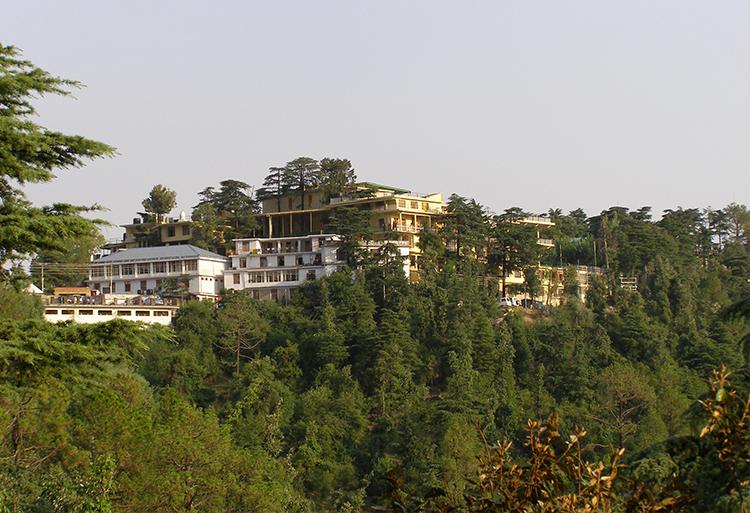
Namgyal Monastery, which has a unique karmic connection with successive Dalai Lamas as their personal monastery, was initially established by the Second Dalai Lama Gedun Gyatso alongside Chokor Gyal Monastery in the Dagpo region. Later, the Third Dalai Lama Sonam Gyatso officially founded it in 1574 at Drepung's Secret Tantric Palace. During its inauguration, His Holiness gave teachings on Je Tsongkhapa's Clear Light Commentary and bestowed the name "Phende Lekshe Ling" (Monastery of Beneficial and Excellent Teachings). In 1478, when the Mongolian King Altan and the Dalai Lama established a patron-priest relationship, they initiated the practice of Ushnishavijaya ritual for longevity, leading to the monastery becoming known as "Namgyal" (Victorious). It was also called "Kuzhab Dratsang" (Personal Monastery). When the Fifth Dalai Lama Ngawang Lobsang Gyatso established the Gaden Phodrang government in 1642 and expanded the Potala Palace, he moved there from Drepung in 1653. Consequently, Namgyal Monastery also relocated from Drepung's Secret Tantric Palace to the Potala, where it was renamed "Tse Namgyal Dratsang" (Summit Namgyal Monastery). The monks not only served the Dalai Lama's religious needs but also performed important rituals for the Gaden Phodrang government's welfare. During the Fifth Dalai Lama's time, many new tantric rituals were established, enhancing the monastery's practices. The Seventh Dalai Lama Kelsang Gyatso introduced the practices of the three main tantric deities (Guhyasamaja, Chakrasamvara, and Yamantaka) and the unique Kalachakra dance, music, and mandala traditions. He fixed the number of monks at 175, leading to the monastery also being known as the "Kalachakra Monastery." In 1751, when the Dalai Lama assumed political leadership and established the Kashag (Cabinet), the monastery's monks were also granted various high and low positions in the Potala administration. From then on, for several centuries, they excellently served both the Dalai Lama's religious needs and the government's ritual requirements. The Exile Namgyal Monastery Phende Lekshe Ling was established after the "Cultural Revolution" devastated Tibet. When His Holiness the 14th Dalai Lama reached India, he gathered 52 Namgyal monks who had escaped to India between 1959-1960 from various places like Dalhousie, and in 1962 established the exile Namgyal Monastery. He helped restore: • Traditional discipline and conduct • Ritual ceremonies and offerings • Mandala drawing • Chanting and ritual music • Butter sculpture and ritual art • Religious instruments and dance In 1970, many young Tibetan students were admitted and began studying Buddhist philosophy, establishing a tradition of combining sutra and tantra studies. The monastery has had seven abbots: Lobsang Dondrub, 100th Gaden Tri Rinpoche Lobsang Nyima, Denma Lo Cho Rinpoche, Gobo Jetsun Lobsang Tenzin, Jado Tulku Tenzin Jungne, Jetsun Sonam Sangye and the Current abbot Tromthog Rinpoche Lobsang Damcho. Currently, there are about 220 monks. Young monks study for 15 years, covering: Major philosophical texts, Five major ritual texts, Traditional Tibetan subjects (grammar, history, poetry) and English language. Following His Holiness's repeated advice about modern education, since November 2, 2017, young monks also study science, computers, and other modern subjects through grade 10, alongside their traditional studies.
Namgyal Monastery, Thekchen Choeling Road P.O. Mcleod Ganj, Dharamshala, Kangra
Himachal Pradesh, 176219
Sed-Gyued Dratsang
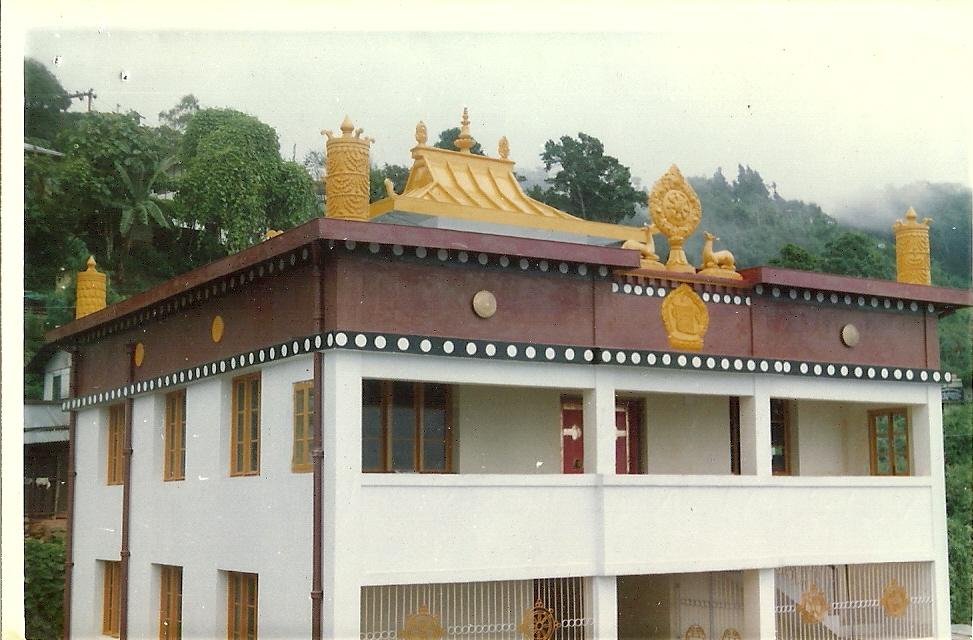
Like a river that traces back to its glacial source, the glorious Se Gyud Ganden Phodrang was established in 1450. According to the histories of the three great seats and two Tantric colleges recorded by Phurchok Ngawang Jampa, it was founded by Je Tsun Sherab Senge. While Jamshey Ngawang Tsondru's history of Vajrabhairava suggests it was established by Je Tsun Sherab Senge's student Je Dulwa Dzinpa Palden Zangpo. Today according to His Holiness the Dalai Lama's teachings, it is confirmed that Je Tsun Sherab Senge was the founder. The Sangchen Ma Monastery Palden Se Gyud College in India was newly established in 2000 in Salugara through the efforts of Se Gyud head Jampa Ngawang, who overcame various challenges. Under the sole blessing and spiritual guidance of His Holiness the Dalai Lama, and through the collaborative efforts of monks, administrators, and the general monastic community - particularly with extensive support from devoted patrons - they were able to construct the main temple, His Holiness's residence, library and study halls, kitchen and store rooms, monks' quarters, and both Tibetan and Western medical clinics. On November 2, 2001, when the monastery complex was fully completed with all its sacred objects, His Holiness the Dalai Lama graciously presided over the inauguration ceremony as requested. He bestowed preliminary teachings on the Thirty-Seven Practices of Bodhisattvas, Middle Stage of Meditation, Ganden Lha Gyama, and combined empowerments of the three deities Guhyasamaja, Chakrasamvara and Vajrabhairava. Additionally, he granted the Mahakala permission, Akshobhya empowerment, and White Tara long-life empowerment. Currently, there are 101 monks, and the school has eight grade levels teaching subjects including memorization of religious practices, Lamrim, ritual instructions, Tibetan language, grammar, poetry, logic, English, and mathematics.
Sed-Gyued Dratsang, Ponda Godown, 10 1/2 Mile P.O. Topkhana, Kalimpong
West Bengal, 734301
Tashi Kyil Monastery
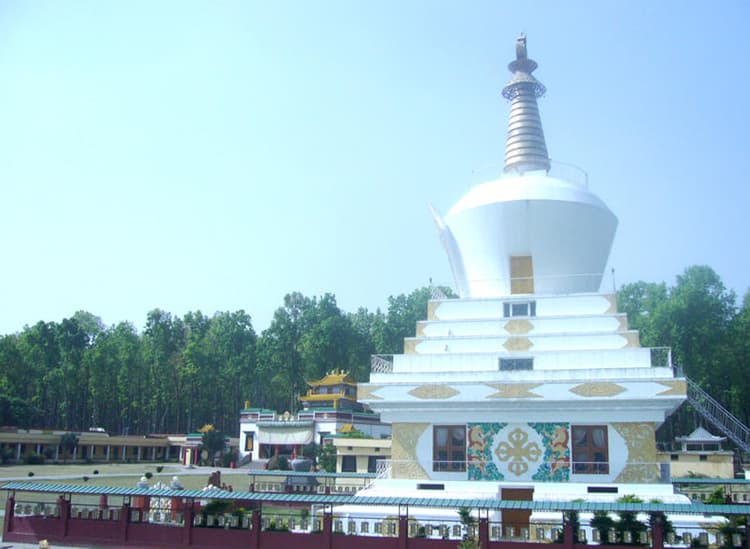
Labrang Tashi Kyil was originally established in 1709 by the First Jamyang Sheypa, Ngawang Tsondru, in Sangkhok Tashi Kyil in Amdo. He initially built an assembly hall and established two colleges: Thosamling and Lower Tantric College. His heart disciple Ngawang Tashi managed the monastery for many years. The Second Jamyang Sheypa expanded the assembly hall to 140 pillars and established the Kalachakra and Medical colleges. The Fourth incarnation founded the Hevajra (Kyedor) College and built the great protector temple, while the Fifth incarnation established the Upper Tantric College.The monastery was administered by successive Jamyang Sheypa incarnations along with four golden throne holders including Gungthang Tenpe Dronme, and eight abbots, who managed both religious and secular affairs. The exile branch of Labrang Tashi Khyil was established in 1965 in Dehradun, North India, under the guidance of His Holiness the Dalai Lama and through the primary efforts of Gungthang Tsultrim. His Holiness personally visited in 1967 to perform the consecration ceremony and give teachings. The main assembly hall contains principal statues of Buddha Shakyamuni with his two disciples, flanked by Je Tsongkhapa and his two spiritual sons, Maitreya, Avalokiteshvara, Tara, a thousand statues of Je Tsongkhapa, and statues of Kunkhyen Jamyang Sheypa and his successors. There are also eight great stupas on either side of the main enlightenment stupa. Currently, the monastery has 84 monks studying the five major Buddhist philosophical texts. The education system includes both traditional Buddhist studies and modern subjects upyo grade eight, including English, Hindi, and Mathematics. The monastery maintains a strong monastic discipline that is appreciated by the local community, and the monks continue their studies in harmony while maintaining pure moral conduct.
Tashi Kyil Monastery, P.O. Clement Town, Dehradun
Uttarakhand, 248002
Gaden Shartse Monastery
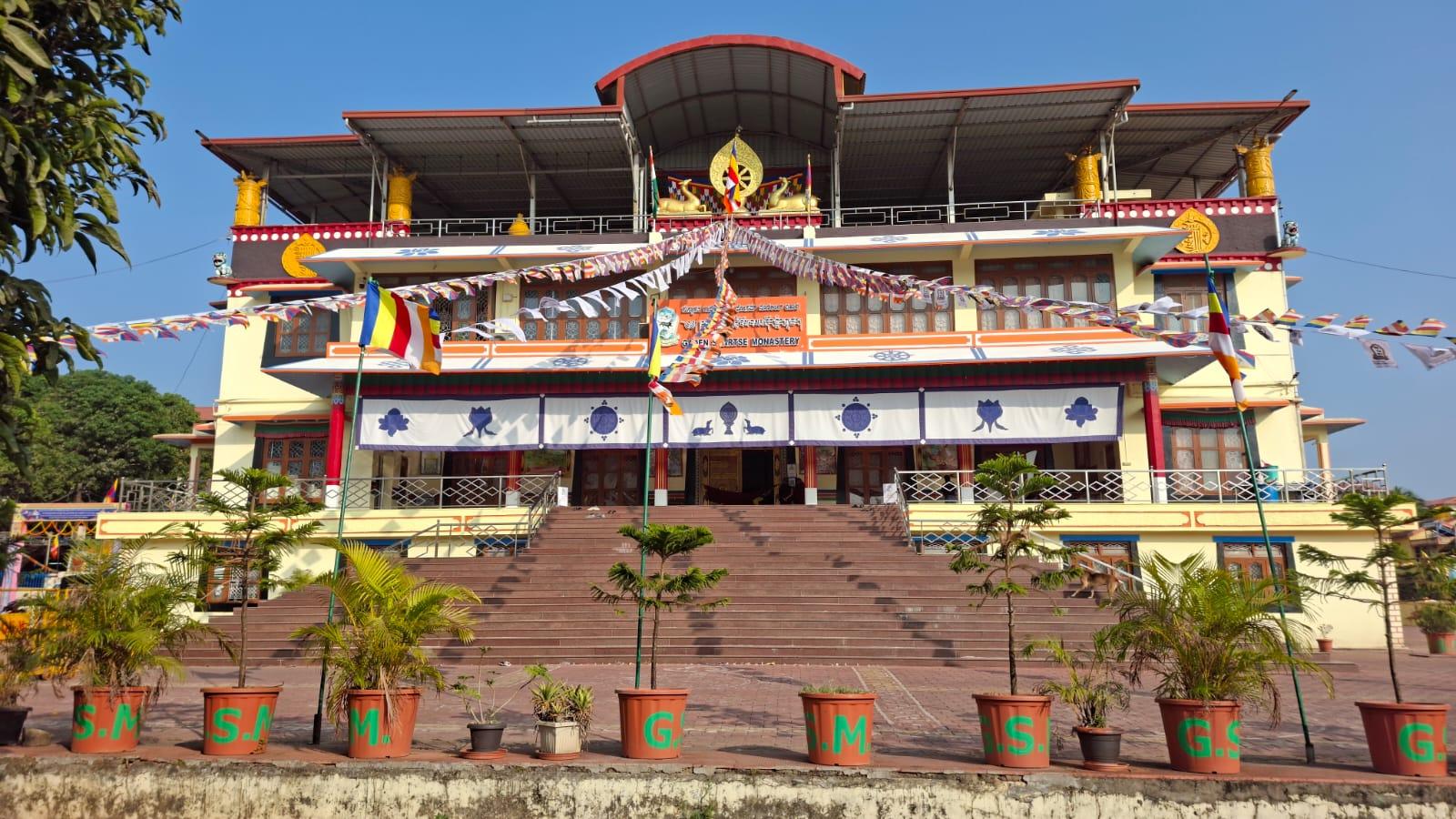
Gaden Shartse Monastery, part of the great Gaden Namgyal Ling Monastery, was founded in 1424 by Neten Rinchen Gyaltsen, one of Je Tsongkhapa's eight pure disciples. The first abbot was Kedrub Gelek Pelzang, Je Tsongkhapa's heart disciple. Since then, there have been 86 successive abbots. Many great scholars and accomplished masters from this monastery have served as tutors to the Dalai Lamas, Gaden Throne holders, abbots of Tantric colleges, and other important positions. In Tibet, the monastery had over 2,500 monks. After the Chinese invasion in 1959, the monastery relocated to India. Initially, about 1,500 monks from various traditions studied for 10 years at Buxa Chogar Thosam Thardoe Ling. Following His Holiness the Dalai Lama's vision and the Tibetan government's direction, in 1969 the monks were relocated to various settlements in South India, with this monastery's monks moving to Mundgod. While focusing primarily on studies, the monks also engaged in farming, business, ritual services, and animal husbandry during the day, while conducting debates and studies at night. Through great hardship, both academic and living conditions improved yearly. Today, unlike before, the monastery provides for all monks' needs, allowing them to focus entirely on their studies. The monastery has eleven khangtsens (residential colleges): Dokhang, Phukhang, Nyagre, Lhopa, Zungchu, Cone, Thebo, Tawon, Ngari, Sogpa and Gungru. The main assembly hall houses numerous sacred objects made of gold and copper alloy, including: Central Buddha statue flanked by his two chief disciples, Maitreya Buddha with Je Tsongkhapa and Atisha, The Three Je Yabse (Je Tsongkhapa and his two main disciples), Three Long-Life deities, Avalokiteshvara, Manjushri, and Vajrapani, Guru Padmasambhava, Milarepa, Sakya Pandita and Thirteen-deity Vajrabhairava mandala. The temple also contains complete sets of the Kangyur and Tengyur (Buddhist canon) and an enlightenment stupa. The educational program duration consists of: 2 years preliminary studies, 5 years for classes 1-5, 4 years for Collected Topics (Dudra), 1 year for Valid Cognition (Pramana), 5 years for Perfection of Wisdom, 3 years for Middle Way Philosophy, 2 years for Treasury of Knowledge (Abhidharma) and 2 years for Monastic Discipline (Vinaya). After completing these 17 years of study and monastery examinations, top students can enter the great Gelug examination system, studying for 6 additional years to receive the Geshe Lharampa degree. Others receive monastery-level Geshe degrees like Tsogrampa, Choetri, and Tsogchok. Those Geshes who haven't yet taken tantric vows must do so during summer retreat, becoming "Geshe Uma Sheyring." After taking these vows, most go to study tantra at the Upper or Lower Tantric Colleges. After receiving their Geshe degree, most remain at the monastery teaching hundreds of students, maintaining the traditions of study and practice. Some pursue solitary meditation retreats, while others serve in administrative roles for the monastery or Tibetan government. Many travel throughout Tibet, India, Nepal, Bhutan and other countries to teach Buddhism. Regular ritual ceremonies include: • Four major seasonal sessions • Four-day Yamantaka mandala ritual in first lunar month • Four-day Kalachakra ritual • Monthly rituals for His Holiness's long life and Tibet's welfare • Three-day rain-making ceremony in ninth month • Maitreya prayer festival and other annual events • Regular monastic ceremonies like confession, summer retreat, etc. The monastery school was established in 1972, now has over 600 students studying from primary to upto grade 10. The school was egistered under the Indian secondary education system. The teaching curriculum comprises traditional Buddhist philosophy, Tibetan language and culture, English, Chinese, social science, mathematics and science, with quarterly, bi-annual and annual examinations. The administrative structure includes the abbot, disciplinarian, and chant master as the three main leaders, along with senior Geshes and over 100 staff members in various departments.
Gaden Shartse Monastery University, P.O. Tibetan Colony, Mundgod, Karwar
Karnataka, 581411

Jangchub Choeling Nunnery
Jangchub Choeling Nunnery is located at camp number three of Mungod Tibet settle in Karnataka state. As per the guidance given by His Holiness the Dalai Lama during one of his visit at the settlement in 1984, the complete construction of the nunnery was completed on 1st July, 1987, during the great festival of wheel of dharma. His Holiness the Dalai Lama in person attended the inauguration and consecrated the nunnery and named the centre Changchup Choeling. His Holiness also took the first hair of renunciation of the first 19 nuns newly being admitted to the nunnery. His Holiness the Dalai Lama was consulted in 2003 and he has approved the construction a new nunnery. Thus, a four-storey assembly hall was constructed with relics in 2007. His Holiness consecrated the building and gave guidance. The main body supports of the nunnery are Buddha, 21 Taras, Avalokiteshwara, Je Tsongkhapa and the protector Palden Lhamo. For the speech support, there are the translated works of Buddha and the translated treatises. The study of the five major texts begun at the nunnery in 1989. As of now, from collected topic class to the Vinaya class, there are 18 classes all together. After the completion of Geshe degree, the nuns study mantra for three years. The main course of the Jangchub Choeling Nunnery is the five major texts, apart from that there are classes for Tibetan field of studies, Chinese, English, and science. There are 280 nuns at the nunnery. Out which 22 nuns completed Geshe degree and 32 nuns are pursuing Geshe study.
Jangchub Choeling Nunnery, , Camp No.3 P.O. Tibetan Colony Mundgod, Distt. Karwar
Karnataka, 581411